How to Start a Vending Machine Business in 2026
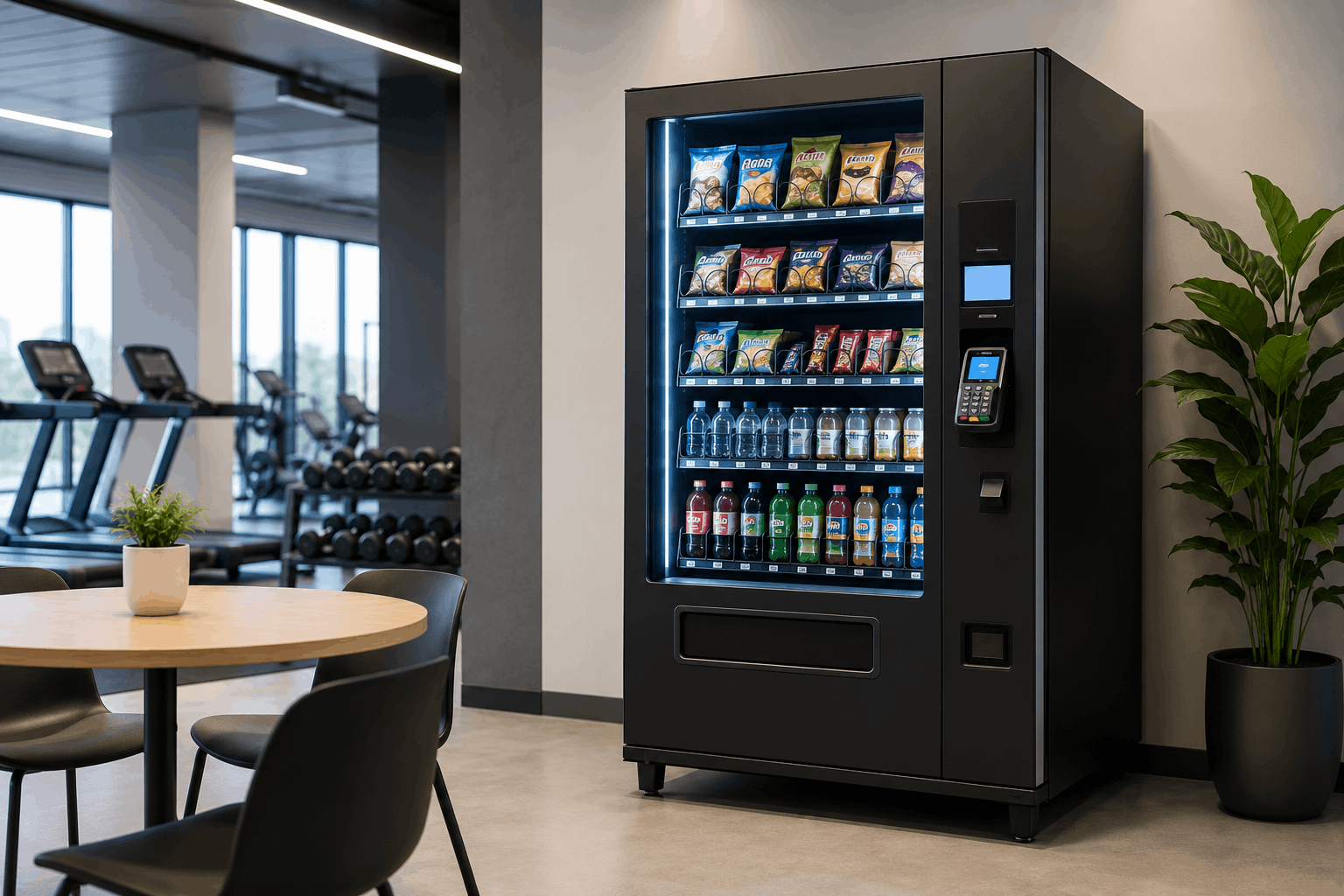
A vending machine business runs on a simple idea: buy machines, place them where people already are, stock them, and collect the margin between what you paid for inventory and what customers pay at the machine. It sounds simple, and the core mechanics are, but finding good locations and staying on top of restocking is usually harder than buying the equipment itself.
This guide covers how to start a vending machine business, including machine types, realistic startup costs, financing options, and the legal requirements most guides skip over, so you can start with a clear, honest picture instead of just the sales pitch.
Who this guide is for: first-time entrepreneurs considering a low-overhead business, side-hustlers wanting semi-passive income, and anyone comparing vending against other small business ideas. If flexible hours matter most to you, our guide to business ideas for women covers other options built around similar scheduling flexibility.
Last verified: July 2026. Costs, regulations, and licensing requirements vary by state and change over time, so confirm current details for your specific location before committing.
Vending Machine Industry at a Glance
- The U.S. vending machine industry generates an estimated several billion dollars in annual revenue.
- Hundreds of thousands of vending machines currently operate across the country, spanning offices, schools, and public spaces.
- Cashless payments now account for a growing share of vending purchases, as more machines add card and mobile payment support.
- Demand for healthy vending options continues to grow, particularly in gyms, offices, and schools.
These figures are general industry estimates and shift over time, so treat them as context rather than precise current statistics.
How We Chose This Information
This guide evaluates vending machine businesses using the same factors most first-time buyers care about: startup cost, location quality, licensing, profitability, and ongoing maintenance.
Quick Comparison: Vending Machine Types
| Machine Type | Startup Cost (Per Machine) | Best For | What It Sells |
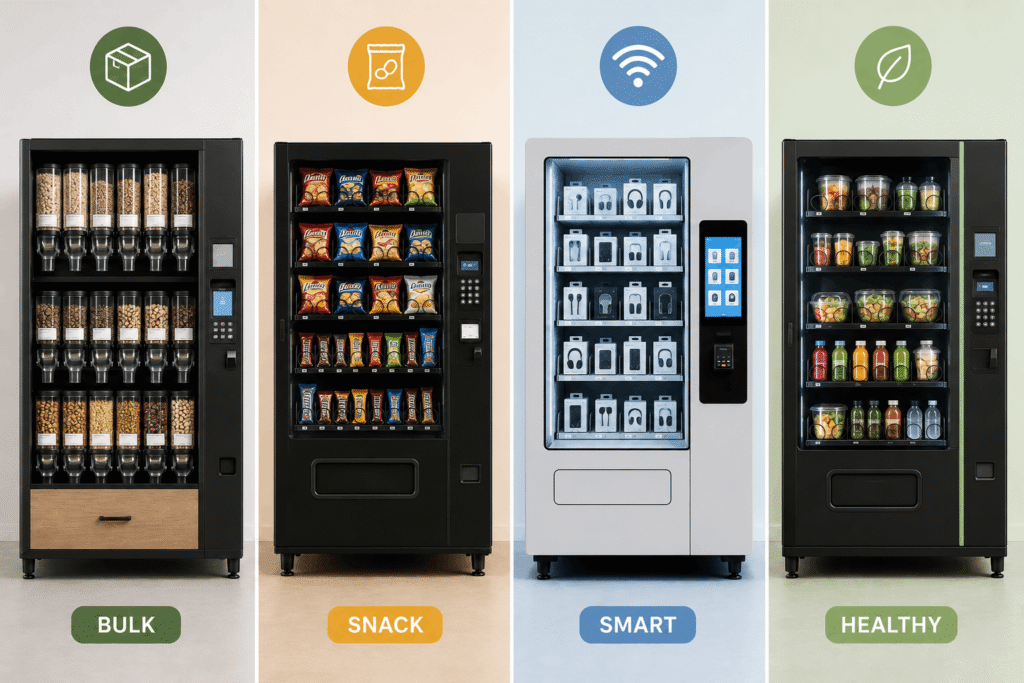
| Bulk/gumball machines | Under $500 | Lowest-cost entry point | Candy, toys, novelty items |
| Used snack or soda machines | $1,200 to $3,000 | Budget-conscious first-time operators | Traditional snacks and drinks |
| New snack or soda machines | $4,000 to $6,500 | Operators wanting reliability and warranties | Traditional snacks and drinks |
| Smart or cashless machines | $6,500 to $12,000 or more | Higher-traffic, tech-forward locations | Snacks, drinks, electronics, or specialty items |
| Healthy vending machines | $4,000 to $8,000 | Gyms, offices, and health-conscious locations | Protein bars, natural drinks, healthier snacks |
Costs are general estimates based on current market pricing and vary by manufacturer, features, and whether you buy new or used, so treat these as planning ranges rather than fixed figures.
Buy New vs. Used Vending Machines
| Factor | New | Used |
| Upfront cost | Higher | Lower |
| Warranty | Usually included | Usually none |
| Technology | Latest cashless features | May lack modern payment options |
| Reliability | Generally more reliable early on | May require repairs sooner |
| Initial ROI | Slower to break even | Often faster to break even |
Which Machine Fits Your Budget?
| Budget | Recommendation |
| Under $500 | Bulk or gumball machine |
| $2,000 to $4,000 | Used snack or soda machine |
| $5,000 to $8,000 | New combo snack and drink machine |
| $10,000 or more | Smart, cashless vending machine |
Vending Machine Business Ideas by Category
- Lowest-cost way to start: bulk or gumball machines
- Best balance of cost and reliability: used snack and soda machines
- Best for higher-traffic, modern locations: smart or cashless machines
- Best for gyms and offices: healthy vending machines
- Best for building recurring revenue fast: buying an existing vending route instead of starting from scratch
If vending doesn’t feel like the right fit after reading this, our broader guide to small business ideas covers 20 other low-cost options across a range of budgets and skill sets.
Pros and Cons of a Vending Machine Business
Pros:
- Semi-passive once a route is established
- Scalable by adding machines without proportionally more time
- Flexible hours around restocking and maintenance
- Repeat customers at well-placed locations
Cons:
- Requires ongoing restocking, especially early on
- Finding strong locations is often the hardest part
- Machines can break down and need repair
- Cash flow depends heavily on foot traffic at each location
How the Vending Machine Business Model Works
You purchase one or more machines, negotiate placement in a location with enough foot traffic, stock the machine with products, and earn the difference between your inventory cost and what customers pay. You’re responsible for restocking, basic maintenance, and often a commission or rental fee paid to the location’s property owner.
Who should skip this business model: anyone expecting a fully hands-off, passive income stream from day one. Restocking, maintenance, and location scouting all require ongoing attention, especially in the first year.
Startup Timeline: How Long Does It Take?
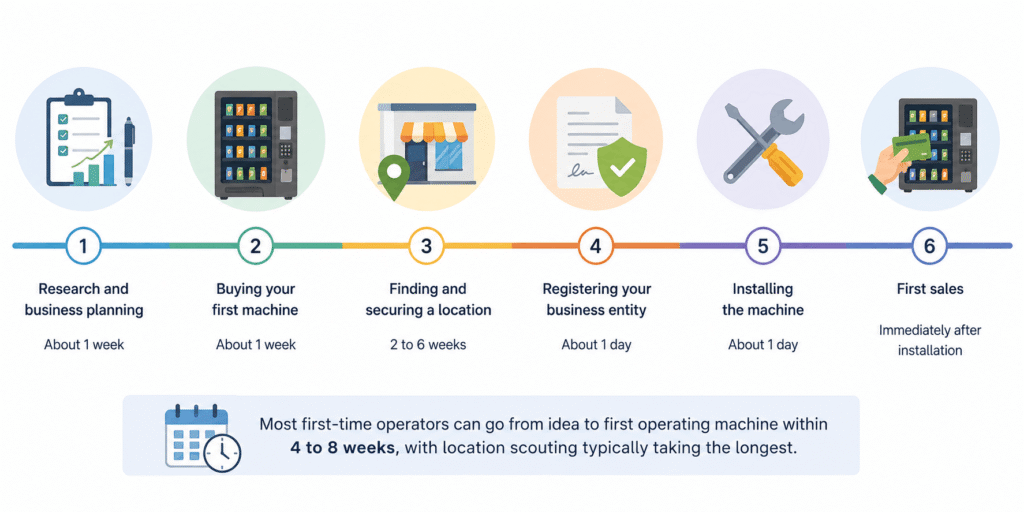
| Step | Estimated Time |
| Research and business planning | About 1 week |
| Buying your first machine | About 1 week |
| Finding and securing a location | 2 to 6 weeks |
| Registering your business entity | About 1 day |
| Installing the machine | About 1 day |
| First sales | Immediately after installation |
Most first-time operators can go from idea to first operating machine within 4 to 8 weeks, with location scouting typically taking the longest.
Step-by-Step: How to Start a Vending Machine Business
1. Research Locations Before Buying Equipment
Your product and machine type need to match the location. A healthy snack machine tends to work better in a gym or corporate office than a budget motel, while a traditional snack and soda machine often fits well in a warehouse or apartment laundry room. Visit potential locations first and check for existing machines, since a poorly stocked or outdated machine already there is often an opportunity rather than a dead end.
2. Choose Your Machine Type and Products
Decide between bulk machines, traditional snack and beverage machines, smart cashless machines, or speciality options like healthy vending based on your target locations and budget. Buying used is generally the more common starting point for new operators, since it keeps upfront capital lower while you learn the business.
3. Set Up Your Business Properly
Most operators register as an LLC to separate personal and business finances and limit personal liability, though this isn’t legally required in every state the way a sales tax permit typically is. You’ll generally need an Employer Identification Number (EIN) from the IRS, which you can get for free; you can check here for the official EIN application, along with a dedicated business bank account and a basic bookkeeping system from day one.
4. Secure Your First Location
Approach property owners directly about the benefits of hosting a machine, and be ready to negotiate a commission or flat rental fee. A written contract covering maintenance responsibility, payment terms, and liability is worth having even for your first single-machine placement.
5. Stock, Launch, and Monitor Performance
Your first machine is as much a learning tool as a revenue source. Track what sells and what doesn’t, and adjust your product mix based on real data rather than assumptions about what a location “should” want.
Licensing and Legal Requirements
This is the section most competitor guides gloss over, and getting it wrong can cause real problems later.
- Business entity (LLC or corporation): not universally required by law to operate, but strongly recommended for liability protection and often expected by location owners and vendors.
- EIN from the IRS: free to obtain and required for tax filing once you’re operating as a business.
- Sales tax ID or permit: typically required at the state or municipal level, since you’re selling taxable goods.
- Health department permits: required in most areas if you sell perishable food or fresh items, separate from general business licensing.
- ADA compliance: machines generally need to meet Americans with Disabilities Act requirements for reach height and control placement, a requirement many first-time operators don’t realize applies to them. You can see here the official ADA accessibility guidelines that may affect machine placement and controls.
Requirements vary meaningfully by state and city, so confirm current rules for your specific location before placing your first machine.
Can You Finance a Vending Machine?
Yes. A vending machine business rarely requires all-cash funding, and several financing paths are common.
- Equipment financing or leasing: lenders specialising in equipment loans often finance vending machines directly, with the machine itself serving as collateral.
- Small business loans: traditional bank loans and SBA-backed loans can cover machine purchases, initial inventory, and other startup costs.
- Leasing with an option to buy: some suppliers offer lease agreements that convert to ownership after a set period, lowering the upfront cash needed.
- Buying an existing route with seller financing: some sellers of established vending routes offer financing directly, spreading the cost over time.
Example Startup Budget
| Expense | Estimated Cost |
| Vending machine (used) | $2,500 |
| Initial inventory | $350 |
| Insurance (annual) | $250 |
| Card reader/cashless payment add-on | $300 |
| Miscellaneous (signage, tools, minor repairs) | $300 |
| Estimated total | ≈ $3,700 |
This example reflects a single used machine and is meant as a planning reference, not a guaranteed cost for your specific setup.
Realistic Costs and Revenue Expectations
Beyond the machine itself, budget for location fees or commissions, initial inventory, insurance, and ongoing maintenance. Revenue depends heavily on foot traffic and location quality. Location quality almost always matters more than machine quality. Reading your monthly numbers accurately, not just top-line revenue, is where genuine business judgement starts to matter as much as the idea itself.
Vending Machine Profit Example
| Daily Sales | Estimated Daily Revenue |
| 20 items at $2 each | $40 |
| 40 items at $2 each | $80 |
| 60 items at $2 each | $120 |
At 40 daily sales, that’s roughly $2,400 in monthly revenue before inventory costs, location commissions, and other expenses are subtracted. Actual results vary widely by location and product mix, so treat any revenue projection as a planning estimate, not a guarantee.
Estimated Monthly Profit Example
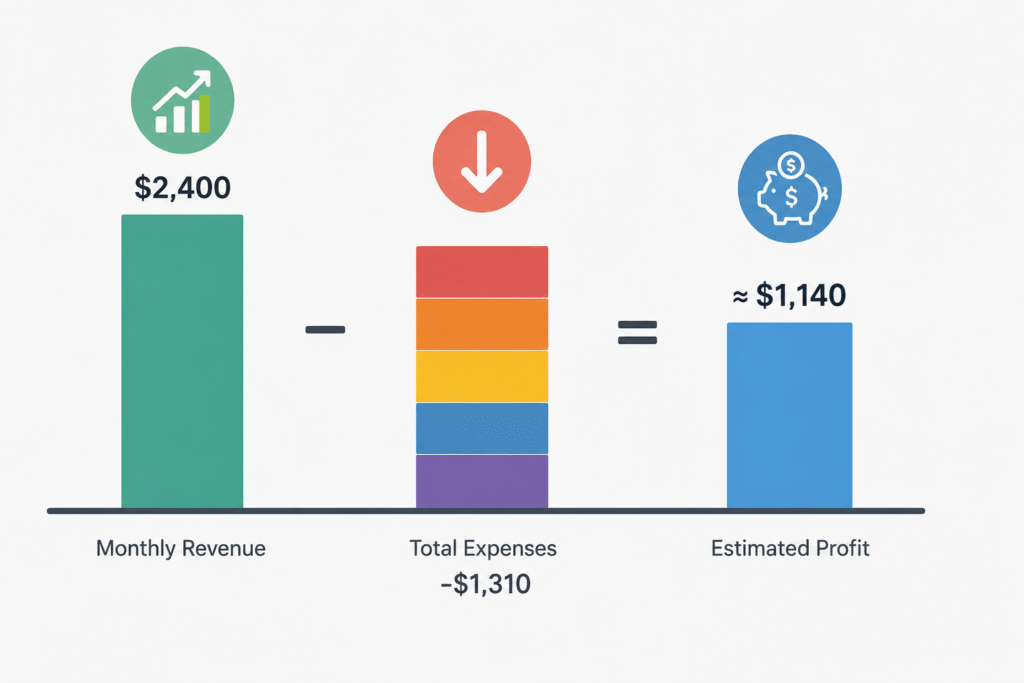
| Line Item | Amount |
| Monthly revenue | $2,400 |
| Inventory costs | -$900 |
| Location commission | -$250 |
| Card processing fees | -$60 |
| Maintenance | -$50 |
| Estimated profit | ≈ $1,140 |
This example is based on the 40-sales-per-day scenario above and will vary significantly by location, product pricing, and commission terms.
How Much Can One Vending Machine Make?
A single vending machine may generate anywhere from a few hundred dollars to several thousand dollars per month, depending on location, product mix, pricing, and foot traffic. High-performing machines in hospitals or busy office buildings often outperform several machines placed in low-traffic locations. This is why location quality, not machine count alone, tends to determine overall profitability.
Vending Machine Business vs. Other Low-Cost Businesses
| Business | Startup Cost | Time Required | Passive Potential |
| Vending machine | $$ | Medium | High |
| Laundromat | $$$$ | Low | High |
| ATM business | $$$ | Low | High |
| Coffee cart | $$ | High | Low |
Do You Need Insurance?
Most vending operators carry at least basic general liability insurance, which covers claims if a customer is injured by a machine. Commercial property insurance can cover the machines themselves against damage, and theft or vandalism coverage is worth considering for machines placed in less secure locations. Location owners sometimes require proof of insurance before agreeing to a placement, so it’s worth arranging coverage before you start pitching locations, not after.
Taxes to Consider
Vending machine income is subject to standard business income tax, and you’ll also need to collect and remit sales tax on taxable items in most states. Keeping track of inventory costs, mileage between locations, and equipment depreciation can support legitimate business deductions at tax time. A basic inventory tracking system also makes it much easier to reconcile sales against restocking records when tax season arrives.
Remote Monitoring Technology
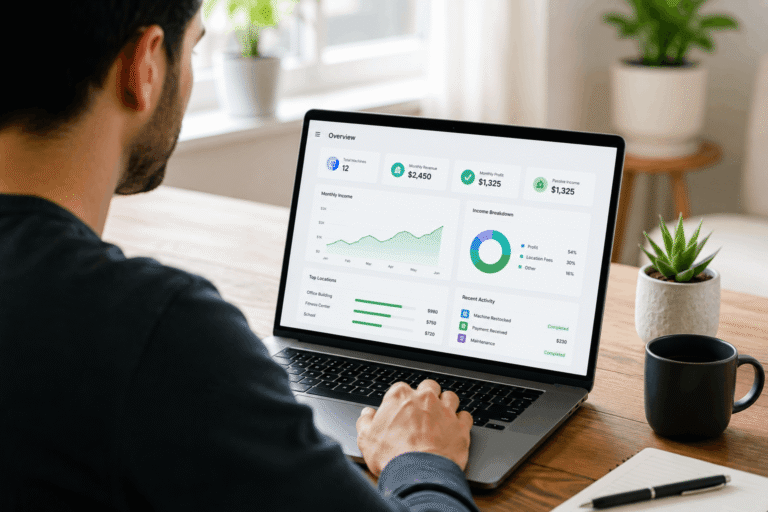
Modern vending software lets owners monitor inventory levels, payment failures, and sales remotely, often through a phone app. This reduces the number of unnecessary restocking trips and helps catch a broken card reader before it costs you weeks of lost sales.
How Many Vending Machines Do You Need?
The right number depends on your goal, not a fixed rule.
- One machine: best treated as a learning tool to understand restocking, pricing, and location performance before scaling up.
- Five machines: a common target for meaningful side income, assuming reasonably strong locations.
- Twenty or more machines: generally where a vending operation starts to function as a full-time business rather than a side hustle, often requiring help with restocking and route management.
The right number for you depends heavily on location quality, not just machine count, since a handful of strong locations can outperform many weak ones.
Best Locations for Vending Machines
| Location Type | Potential |
| Hospital | Excellent |
| School | Excellent |
| Gym | Excellent |
| Factory or warehouse | Very good |
| Apartment building | Very good |
| Hotel | Good |
Potential varies by specific site traffic and existing competition, so use this as a general starting point rather than a guarantee for any individual location.
Best Vending Machine Products
- Bottled water and soda
- Chips and other salty snacks
- Protein bars and healthier snack options
- Energy drinks
- Candy and gum
- Fresh or refrigerated items, in locations with the right machine type
Matching your product mix to the specific location matters more than picking universally “best” products, since a gym audience and a warehouse audience want different things.
Cash vs. Cashless Payments
Most new vending machines now support both cash and cashless payment options, and offering both tends to maximize sales.
- Cash: still preferred by some customers and requires no processing fees, though it means physically collecting money and carrying a bag of coins and bills.
- Card readers: allow debit and credit card payments, typically for a per-transaction processing fee.
- Mobile payments (Apple Pay, Google Pay): increasingly expected by younger customers and usually run through the same card reader hardware.
Adding a card reader is generally a worthwhile upgrade even on a budget machine, since it removes a common reason customers walk away without buying.
Common Mistakes When Starting a Vending Machine Business
- Buying the machine before securing a location: equipment sitting in storage generates no revenue, so lock in placement first where possible.
- Underestimating restocking effort: This business is rarely as passive as it’s marketed, especially in the first several months.
- Skipping the business entity and tax setup: This is the step most first-time operators skip, and it can create real problems around liability and tax filing later.
- Ignoring ADA requirements: overlooked accessibility rules can create compliance issues that are more costly to fix after installation than before.
- Placing a machine next to direct competition: a machine next to a cafeteria or 24/7 convenience store faces built-in competition that limits consistent sales.
Should You Buy an Existing Vending Route?
Pros: You inherit existing customers and established locations and can review actual revenue history before buying instead of guessing.
Cons: existing routes typically cost more upfront than starting from scratch, and you still need to independently verify sales figures and inspect equipment condition rather than taking the seller’s word for it.
Basic Vending Machine Maintenance
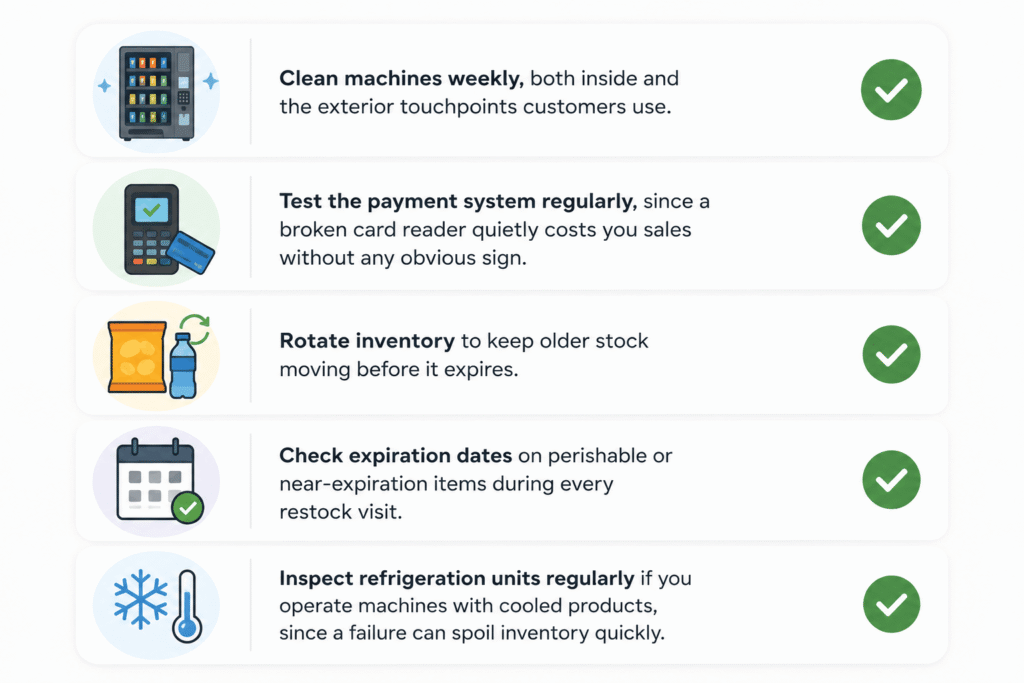
- Clean machines weekly, both inside and the exterior touchpoints customers use.
- Test the payment system regularly, since a broken card reader quietly costs you sales without any obvious sign.
- Rotate inventory to keep older stock moving before it expires.
- Check expiration dates on perishable or near-expiration items during every restock visit.
- Inspect refrigeration units regularly if you operate machines with cooled products, since a failure can spoil inventory quickly.
How to Find Vending Machine Locations
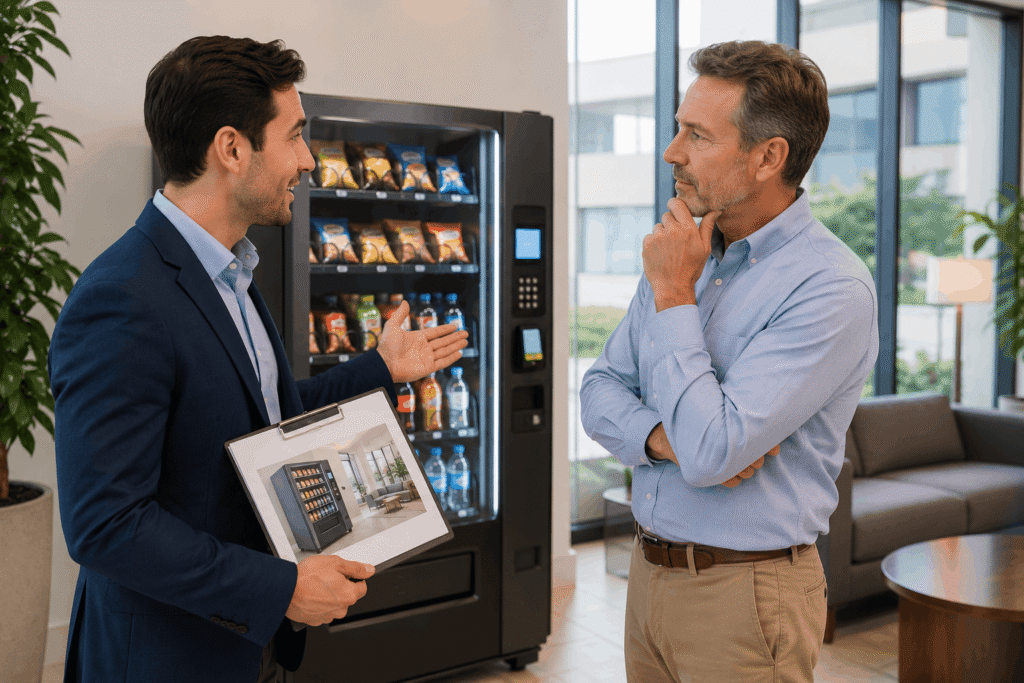
Finding strong locations is usually harder than buying the machine itself. Cold outreach to property managers, especially at apartment buildings and office complexes, is a common starting point. Gyms, schools, and laundromats are also worth approaching directly, since all three see steady foot traffic throughout the day. Bringing a simple one-page pitch showing the commission structure and maintenance plan tends to make property owners more comfortable saying yes than a purely verbal pitch.
Expert Tip: A machine in a high-traffic location with average products usually outperforms a premium machine in a poor location. Focus on securing great locations before expanding your fleet.
Frequently Asked Questions
How much does it cost to start a vending machine business?
Costs range from under $500 for a basic bulk machine to $12,000 or more for a new smart, cashless machine, with most first-time operators starting with one or two used snack or soda machines in the $1,200 to $3,000 range each.
Do I need an LLC to start a vending machine business?
Not necessarily. Most states don’t legally require a business entity to operate, but a sales tax permit typically is required, and many operators choose an LLC anyway for liability protection.
Is a vending machine business actually passive income?
Not fully, especially at the start. Restocking, maintenance, and finding good locations require ongoing effort, though the day-to-day time commitment is generally lower than a business requiring your physical presence during set hours.
Where are the best locations for vending machines?
High-foot-traffic spots without existing strong competition tend to work best, such as offices, gyms, schools, and apartment buildings, though the right fit depends on matching your product type to the location’s needs.
Is buying an existing vending route better than starting from scratch?
It can be, since you skip the initial location-scouting phase, but confirm why the current owner is selling and review actual sales data before buying rather than taking their word for its profitability.
What is a good vending machine business plan?
A solid plan outlines your target locations, machine types and product mix, startup budget, licensing steps, and a realistic revenue estimate based on comparable machines, rather than an overly optimistic projection.
How do I find good vending machine suppliers?
Options range from manufacturers selling new equipment directly, to secondary marketplaces like eBay for used machines, to buying an established route that already includes working equipment.
Final Recommendation
If you want the lowest-cost entry point, start with one or two bulk or used snack machines before investing in smart, cashless equipment. If you’re targeting gyms or offices specifically, healthy vending machines are worth the higher upfront cost. If you’d rather skip the location-scouting phase entirely, buying an established route, with verified sales data, can get you to consistent revenue faster than starting from zero.
Conclusion
Starting a vending machine business is genuinely one of the lower-overhead ways to become a small business owner, but the real work is in finding good locations and staying on top of restocking, not just buying equipment. Confirm your state’s specific licensing requirements, start with one or two machines to learn the business, and reinvest early profits into better locations rather than more machines right away.
Sources
- Internal Revenue Service (IRS), EIN application guidance
- ADA.gov, accessibility requirements for public accommodations
- U.S. Small Business Administration (SBA), small business planning guidance
- National Automatic Merchandising Association (NAMA), vending industry data
- IBISWorld and Grand View Research, vending machine industry market size reports