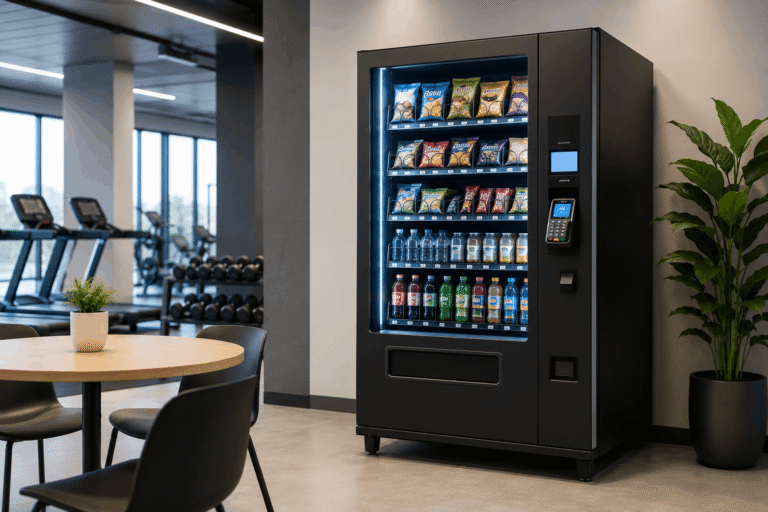
Small Business Ideas in 2026

Starting a business has never required as little upfront capital as it does right now. Many of the strongest small business ideas for 2026 can launch with a laptop, a phone, and a specific skill, rather than a large loan or a storefront.
This guide covers small business ideas organized by startup cost, difficulty, and business model, so you can find something that fits your budget and background instead of scrolling through fifty unrelated options.
Who this guide is for: first-time entrepreneurs, side-hustlers testing an idea before going full-time, and anyone comparing low-investment business ideas against higher-cost ones.
Last verified: July 2026. Market demand, startup costs, and regulations shift over time, so confirm current details for your specific location and industry before committing.
Editor’s note: we reviewed each business idea based on startup cost, demand, scalability, and barriers to entry, using data from the U.S. Small Business Administration, the U.S. Census Bureau, and current market trend reports.
Quick Pros and Cons
| Business | Pros | Cons |
| Virtual assistant | Low startup cost, fast to launch | Income tied closely to client hours |
| Cleaning services | Steady, recurring demand | Physically demanding work |
| Social media management | Recurring monthly revenue | Requires consistent content output |
| AI consulting | High income potential | Requires genuine technical expertise |
| Copywriting | Low overhead, flexible schedule | Revision-heavy client work |
| Vending machine business | Semi-passive once established | Higher upfront capital required |
| Bookkeeping | Recurring, stable client relationships | Detail-heavy, deadline-driven |
| Handyman services | Can charge well for varied skills | Requires broad hands-on skill set |
How We Chose These Business Ideas
Every idea here was evaluated against the same criteria, so the list stays consistent rather than random.
- Real, current market demand rather than a fading trend
- A realistic startup cost range, not just a best-case estimate
- Skills that can reasonably be learned or already exist for most first-time founders
- A mix of digital, service-based, and local business types
- Scalability potential beyond just a single-person side income
Small Business Ideas by Budget
Under $500: virtual assistant services, copywriting, freelance writing, resume writing, translation services, tutoring, podcast editing, and video editing.
$500 to $2,000: cleaning services, handyman services, graphic design, web design, bookkeeping, lawn care.
$2,000 to $5,000: social media management, AI consulting, health and wellness coaching, photography, SEO services.
$5,000 or more: mobile pet grooming, vending machine business, online courses, pressure washing (with commercial equipment), car detailing (with mobile setup), junk removal (with a truck or trailer).
Online vs. Local Business Ideas

| Online (Serve Clients Anywhere) | Local (Serve a Specific Area) |
| Copywriting | Cleaning services |
| Virtual assistant services | Handyman services |
| AI consulting | Mobile pet grooming |
| Bookkeeping | Lawn care |
| Web design and graphic design | Car detailing |
| Online courses | Junk removal |
| Translation services | Pressure washing |
| Tutoring (can be either) | Photography (often local) |
Quick Comparison: Small Business Ideas at a Glance
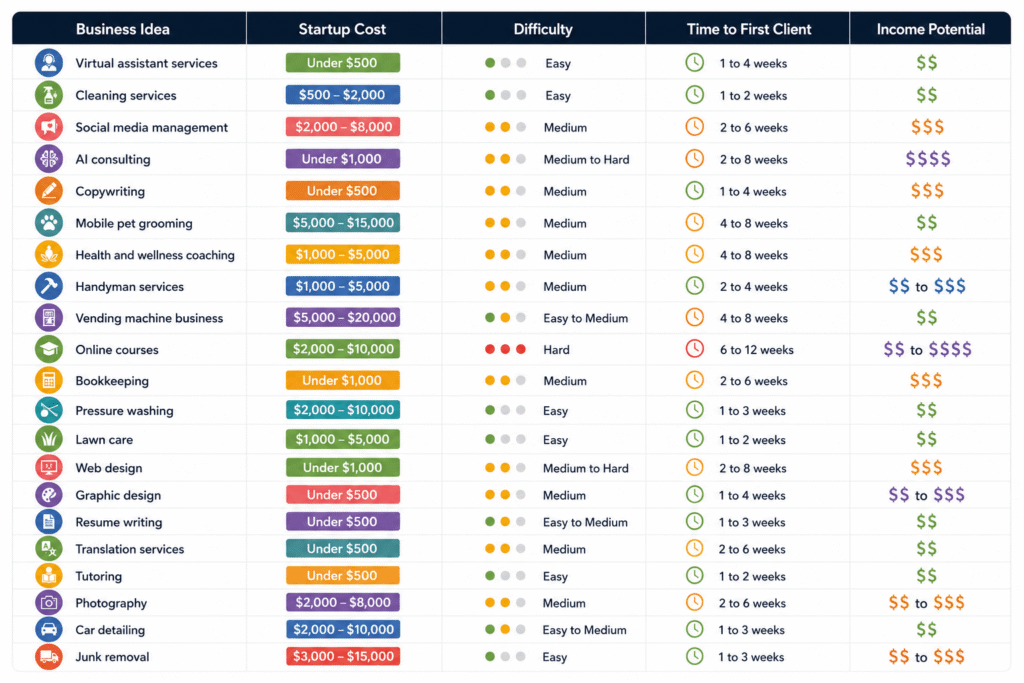
| Business Idea | Startup Cost | Difficulty | Time to First Client | Income Potential |
| Virtual assistant services | Under $500 | Easy | 1 to 4 weeks | $$ |
| Cleaning services | $500 to $2,000 | Easy | 1 to 2 weeks | $$ |
| Social media management | $2,000 to $8,000 | Medium | 2 to 6 weeks | $$$ |
| AI consulting | Under $1,000 | Medium to Hard | 2 to 8 weeks | $$$$ |
| Copywriting | Under $500 | Medium | 1 to 4 weeks | $$$ |
| Mobile pet grooming | $5,000 to $15,000 | Medium | 4 to 8 weeks | $$ |
| Health and wellness coaching | $1,000 to $5,000 | Medium | 4 to 8 weeks | $$$ |
| Handyman services | $1,000 to $5,000 | Medium | 2 to 4 weeks | $$ to $$$ |
| Vending machine business | $5,000 to $20,000 | Easy to Medium | 4 to 8 weeks | $$ |
| Online courses | $2,000 to $10,000 | Hard | 6 to 12 weeks | $$ to $$$$ |
| Bookkeeping | Under $1,000 | Medium | 2 to 6 weeks | $$$ |
| Pressure washing | $2,000 to $10,000 | Easy | 1 to 3 weeks | $$ |
| Lawn care | $1,000 to $5,000 | Easy | 1 to 2 weeks | $$ |
| Web design | Under $1,000 | Medium to Hard | 2 to 8 weeks | $$$ |
| Graphic design | Under $500 | Medium | 1 to 4 weeks | $$ to $$$ |
| Resume writing | Under $500 | Easy to Medium | 1 to 3 weeks | $$ |
| Translation services | Under $500 | Medium | 2 to 6 weeks | $$ |
| Tutoring | Under $500 | Easy | 1 to 2 weeks | $$ |
| Photography | $2,000 to $8,000 | Medium | 2 to 6 weeks | $$ to $$$ |
| Car detailing | $2,000 to $10,000 | Easy to Medium | 1 to 3 weeks | $$ |
| Junk removal | $3,000 to $15,000 | Easy | 1 to 3 weeks | $$ to $$$ |
Startup costs, timelines, and income potential are general estimates that vary significantly by location, scale, and how much you do yourself versus outsource, so treat these as planning ranges rather than fixed figures.
Best Business Idea by Personality Type
- Good with people: health and wellness coaching or tutoring.
- Good at writing: copywriting, resume writing, or translation services.
- Likes physical, hands-on work: pressure washing, lawn care, or junk removal.
- More introverted, prefers independent work: web design, bookkeeping, or graphic design.
- Creative and visual: graphic design or photography.
- Analytical and detail-oriented: bookkeeping or AI consulting.
Estimated Monthly Income by Business
| Business | Typical Monthly Income (Established) |
| Virtual assistant services | $1,000 to $5,000 |
| Copywriting | $2,000 to $10,000 |
| AI consulting | $5,000 to $20,000 or more |
| Cleaning services | $2,000 to $8,000 |
| Social media management | $3,000 to $15,000 |
| Bookkeeping | $2,000 to $10,000 |
| Vending machine business | $1,000 to $6,000 |
These figures are broad estimates for an established business, not a first-month income, and vary significantly by experience, location, client base, and how many hours you work. Treat them as general context rather than as a guarantee.
Small Business Ideas by Category
- Best low-cost idea to start this week: Virtual assistant services
- Best for hands-on, local work: Cleaning services
- Best for tech-savvy founders: AI consulting
- Best for passive-leaning income: Vending machine business
- Best for subject-matter experts: Online courses
How to Choose the Right Business Idea for You
Before picking from the list below, it helps to filter ideas against your own situation rather than just picking the most popular one.
- What skills do you already have? Businesses built on existing skills launch faster and carry less risk than ones requiring a new certification first.
- How much can you invest without financial strain? Some ideas need under $500, while others require $10,000 or more before your first sale.
- How much time can you realistically commit? A side hustle run in evenings and weekends needs a different business type than one you’re launching full-time.
- Is there real demand where you live or online? A boat cleaning business works best near a coastline, while a fully digital service can serve clients anywhere.
Before You Start: A Validation Checklist
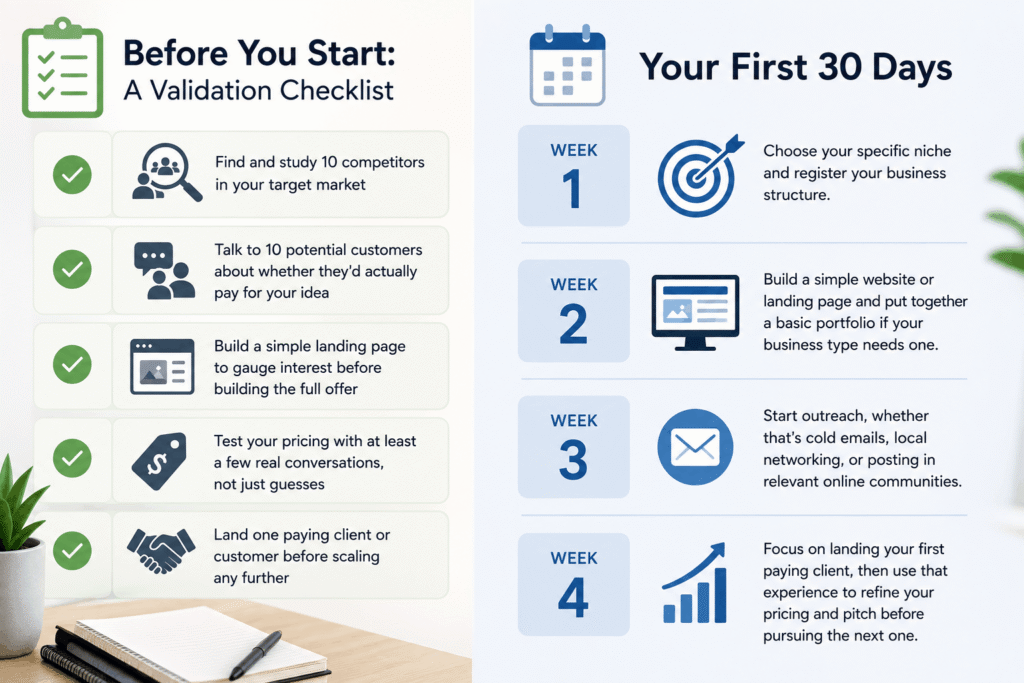
Before committing significant time or money, work through a short validation process to reduce your risk of a costly mistake.
- Find and study 10 competitors in your target market
- Talk to 10 potential customers about whether they’d actually pay for your idea
- Build a simple landing page to gauge interest before building the full offer
- Test your pricing with at least a few real conversations, not just guesses
- Land one paying client or customer before scaling any further
Your First 30 Days
Week 1: Choose your specific niche and register your business structure.
Week 2: Build a simple website or landing page and put together a basic portfolio if your business type needs one.
Week 3: Start outreach, whether that’s cold emails, local networking, or posting in relevant online communities.
Week 4: Focus on landing your first paying client, then use that experience to refine your pricing and pitch before pursuing the next one.
Best Small Business Ideas
Virtual Assistant Services
Best for: anyone wanting the fastest, lowest-cost entry into self-employment.
Startup cost: generally under $500, since the main requirement is a laptop and reliable internet.
Why it works: small business owners increasingly outsource scheduling, email management, bookkeeping support, CRM upkeep, customer support, and even travel planning rather than hiring a full-time employee.
Can it scale? Yes, experienced VAs often grow into small agencies by hiring and training additional assistants.
Who should skip this: anyone uncomfortable with ongoing client communication, since the role is relationship-heavy by nature.
Practical tip: starting with one or two long-term clients tends to build more stable income than chasing many one-off gigs early on.
Cleaning Services
Best for: founders who want hands-on, local work with straightforward pricing.
Startup cost: typically $500 to $2,000 for basic supplies and initial marketing.
Why it works: Demand spans several distinct niches, including commercial offices, residential homes, Airbnb turnovers, move-out cleans, and restaurants, each with slightly different pricing and scheduling patterns.
Can it scale? Yes, cleaning businesses commonly scale by hiring crews and managing multiple jobs per day rather than doing the work personally.
Who should skip this: anyone not prepared for physically demanding, recurring work, since consistency matters more than any single job.
May require licensing: some cities and states require a general business license, and bonding or insurance is strongly recommended even where not legally required.
Practical tip: focusing on a specific niche, like Airbnb turnover cleaning or office spaces within a few blocks of each other, tends to be more profitable than taking any client anywhere in a city.
Social Media Management
Best for: marketing-minded founders comfortable managing multiple client accounts.
Startup cost: generally $2,000 to $8,000 for tools, branding, and initial outreach.
Why it works: local businesses increasingly depend on consistent content across TikTok, Instagram, LinkedIn, and YouTube Shorts, but few have the in-house time to manage all four well.
Can it scale? Yes, into a small agency model with account managers and dedicated content creators as client count grows.
Who should skip this: founders who dislike consistent client reporting and communication, since retention depends heavily on demonstrating results.
Practical tip: targeting local restaurants, gyms, or boutiques as a starting niche tends to produce steadier referral growth than serving unrelated industries.
AI Consulting
Best for: tech-savvy professionals who want to help businesses adopt AI tools without needing to build software themselves.
Startup cost: often under $1,000, since the work is primarily knowledge-based.
Why it works: AI consulting usually succeeds when focused on one industry, such as dental clinics, real estate agencies, or law firms, rather than positioned as generic help for “any business.”
Can it scale? Yes, into productized services or small teams once you’ve refined a repeatable process for a specific industry.
Who should skip this: founders without a genuine technical comfort level, since credibility here depends on actually understanding the tools being recommended.
Practical tip: focusing on one specific use case, such as automating customer support responses for dental practices specifically, tends to be easier to sell than offering broad, undefined “AI consulting.”
Copywriting and Content Services
Best for: strong writers who want a low-overhead freelance business.
Startup cost: generally under $500, mainly a portfolio and outreach time.
Why it works: small companies consistently need landing pages, email marketing sequences, sales pages, and SEO articles to compete with larger, better-resourced competitors.
Can it scale? Yes, into an agency model by subcontracting writers once you have consistent client demand.
Who should skip this: anyone who dislikes revision-heavy client work, since copywriting often involves multiple rounds of feedback.
Practical tip: building a small portfolio of sample work before your first paid client makes outreach noticeably easier than starting with nothing to show.
Mobile Pet Grooming
Best for: pet-industry professionals wanting a home-visit business model.
Startup cost: typically $5,000 to $15,000 for a vehicle setup and equipment.
Why it works: pet owners increasingly pay for the convenience of at-home grooming rather than transporting pets to a storefront.
Can it scale? Yes, by adding additional mobile units and groomers once one route is fully booked.
Who should skip this: anyone without grooming experience or without the higher upfront capital a mobile setup requires compared to a home-based side hustle.
Practical tip: starting with basic grooming and adding higher-margin add-ons, like nail trims or teeth cleaning, tends to grow revenue faster than competing purely on price.
Health and Wellness Coaching
Best for: certified coaches wanting to turn expertise into a client-based business.
Startup cost: generally $1,000 to $5,000 for certification and basic marketing, if not already certified.
Why it works: consumer spending on wellness, nutrition, and lifestyle coaching has grown significantly, especially among younger clients seeking personalized guidance.
Can it scale? Yes, into group coaching programs or digital courses once you have a proven one-on-one framework.
Who should skip this: anyone without a certification relevant to their specific coaching niche, since credibility matters heavily in this space.
May require licensing: certain health-adjacent coaching claims can cross into regulated territory, so review your state’s specific rules around health advice before marketing your services.
Practical tip: offering both in-person and online sessions from the start widens your potential client base without much added cost.
Handyman Services
Best for: founders with a trades background wanting flexible, local work.
Startup cost: typically $1,000 to $5,000 for basic tools and insurance.
Why it works: homeowners consistently need repairs and small jobs too minor for a full contractor but outside typical DIY skill levels.
Can it scale? Yes, by hiring additional technicians once demand exceeds what one person can handle.
Who should skip this: anyone without a broad enough skill set to handle varied jobs, since inconsistency here can hurt referrals quickly.
May require licensing: several states have specific handyman licensing rules or cap the dollar value of jobs you can take without a contractor’s license.
Practical tip: checking your state’s specific handyman licensing requirements before starting matters, since rules vary meaningfully by location. The U.S. Small Business Administration is a reliable starting point if you’re unsure where to look.
Vending Machine Business
Best for: founders wanting a more semi-passive, scalable income stream.
Startup cost: generally $5,000 to $20,000 depending on machine count and type.
Why it works: modern vending machines can sell far more than snacks, including electronics and health-conscious products, with minimal day-to-day involvement once placed.
Can it scale? Yes, this is one of the more naturally scalable ideas on this list, since adding machines doesn’t require proportionally more of your time.
Who should skip this: anyone expecting a fully passive business, since restocking, maintenance, and location scouting still require ongoing attention.
Practical tip: securing a high-traffic location before purchasing equipment matters more to profitability than the specific machine you choose.
Online Courses and Digital Education
Best for: subject-matter experts wanting to turn existing knowledge into a scalable product.
Startup cost: typically $2,000 to $10,000 for course production and platform costs.
Why it works: the online education market has grown substantially, and a well-made course can generate income long after the initial time investment.
Can it scale? Yes, arguably the most scalable idea on this list, since a single course can serve unlimited students without added production cost.
Who should skip this: anyone without a genuinely differentiated angle, since course marketplaces are increasingly crowded in popular topics.
Practical tip: picking a specific, narrower niche rather than a broad, generic topic tends to perform better against more established competitors.
Bookkeeping Services
Best for: detail-oriented founders comfortable with financial software.
Startup cost: generally under $1,000 for software and certification if needed.
Why it works: small businesses consistently need help managing daily transactions, payroll, and basic financial reporting, often at a fraction of the cost of a full-time hire.
Can it scale? Yes, into a small firm by hiring additional bookkeepers as your client base grows.
Who should skip this: anyone uncomfortable with detail-heavy, deadline-driven work, since errors here directly affect a client’s finances.
Practical tip: specializing in one industry, such as e-commerce or restaurants, makes your services easier to market than staying fully generalist.
Pressure Washing
Best for: founders wanting a straightforward, equipment-based local service.
Startup cost: typically $2,000 to $10,000 depending on commercial-grade equipment.
Why it works: driveway, siding, and deck cleaning have remained steady, recurring demands for homeowners and property managers alike.
Can it scale? Yes, by adding crews and equipment once your schedule fills up.
Who should skip this: anyone unwilling to do physically demanding outdoor work in varying weather.
Practical tip: offering seasonal packages, like a spring cleaning bundle, tends to smooth out otherwise inconsistent demand.
Lawn Care
Best for: founders wanting recurring, local, relatively low-skill entry work.
Startup cost: generally $1,000 to $5,000 for basic equipment.
Why it works: lawn care is one of the most recurring, predictable local services, since most clients need service weekly or biweekly during growing season.
Can it scale? Yes, into a multi-crew operation, though seasonality is a real factor to plan around in colder climates.
Who should skip this: anyone in a climate with a very short growing season, without a winter service (like snow removal) to fill the gap.
Practical tip: bundling lawn care with simple landscaping add-ons tends to increase revenue per client without much added cost.
Web Design
Best for: founders with design or basic development skills wanting project-based work.
Startup cost: generally under $1,000 for software and a portfolio site.
Why it works: small businesses consistently need a professional website but often can’t justify a full in-house hire.
Can it scale? Yes, into a small studio by subcontracting design or development work.
Who should skip this: anyone without at least basic design sense, since results here are highly visible and judged quickly by clients.
Practical tip: offering ongoing maintenance packages after the initial build tends to create more stable, recurring revenue than one-off project fees alone.
Graphic Design
Best for: visually skilled founders wanting flexible freelance work.
Startup cost: generally under $500 for design software subscriptions.
Why it works: businesses consistently need logos, social media graphics, and marketing materials, and demand rarely disappears even in slower economic periods.
Can it scale? Yes, into a small agency by bringing on additional designers.
Who should skip this: anyone without a genuine design skill set, since this field is visibly judged by portfolio quality.
Practical tip: specializing in one deliverable type, like social media graphics specifically, can help you stand out against fully generalist designers.
Resume Writing
Best for: strong writers with an HR or recruiting background.
Startup cost: generally under $500.
Why it works: job seekers consistently pay for professional help standing out in competitive job markets, especially during layoff waves.
Can it scale? Somewhat, mainly by adding related services like LinkedIn profile optimization or interview coaching.
Who should skip this: anyone without strong writing skills or familiarity with current resume formatting standards.
Practical tip: bundling a resume with a matching cover letter and LinkedIn update tends to increase your average order value more than pricing resumes alone.
Translation Services
Best for: bilingual or multilingual founders wanting flexible, remote work.
Startup cost: generally under $500.
Why it works: businesses expanding internationally consistently need document, website, and marketing translation, and demand isn’t limited to any one region.
Can it scale? Yes, into an agency model by bringing on translators for additional language pairs.
Who should skip this: anyone without genuine fluency in both languages, since translation errors can carry real business consequences for clients.
Practical tip: specializing in a specific document type, like legal or medical translation, often commands higher rates than general translation work.
Tutoring
Best for: subject matter experts wanting flexible, part-time or full-time work.
Startup cost: generally under $500.
Why it works: demand spans K-12 academic subjects, test prep, and adult skills tutoring and can be delivered online or in person.
Can it scale? Yes, into a small tutoring business by hiring additional tutors across subjects.
Who should skip this: anyone without patience for repetitive explanation, since tutoring is inherently instructional rather than project-based.
Practical tip: specializing in a specific test or subject, rather than general tutoring, tends to command higher rates.
Photography
Best for: founders with photography skills wanting event or portrait-based work.
Startup cost: typically $2,000 to $8,000 for camera equipment.
Why it works: weddings, family portraits, and small business content needs provide steady, if seasonal, demand.
Can it scale? Somewhat, by hiring second shooters or editors, though the core work stays more personal than fully scalable service businesses.
Who should skip this: anyone without existing photography skill, since equipment alone doesn’t produce a marketable portfolio.
Practical tip: building a business content package for local companies can help smooth out the seasonality of wedding and event work.
Car Detailing
Best for: founders wanting a hands-on, mobile local service.
Startup cost: typically $2,000 to $10,000 for a mobile setup.
Why it works: car owners increasingly prefer the convenience of at-home or at-office detailing over driving to a shop.
Can it scale? Yes, by adding additional mobile units and detailers.
Who should skip this: anyone unwilling to do physically demanding, outdoor work regardless of weather.
Practical tip: partnering with local car dealerships for pre-sale detailing can provide more consistent volume than relying on individual customers alone.
Junk Removal
Best for: founders wanting straightforward, high-demand local work.
Startup cost: typically $3,000 to $15,000 for a truck or trailer.
Why it works: move-outs, estate cleanouts, and general decluttering create consistent demand that isn’t easily replaced by DIY solutions for larger items.
Can it scale? Yes, by adding trucks and crews as demand grows.
Who should skip this: anyone unable to handle physically demanding lifting and hauling work.
Practical tip: partnering with real estate agents for move-out cleanouts can create a steady referral pipeline beyond one-off customers.
Most Profitable Business Ideas
Profitability depends heavily on execution, but a few categories consistently show stronger margins than others.
- AI and automation consulting: knowledge-based work with low overhead often supports higher hourly rates than physical-labor businesses.
- Specialized coaching and consulting: niche expertise, such as compliance or data operations consulting, commands premium rates due to limited supply relative to demand.
- Subscription-based service models: businesses that convert clients into recurring monthly revenue generally see better long-term economics than one-off project work.
- Vending and semi-automated retail: lower ongoing labor costs relative to revenue can support strong margins once a route is established.
Home Business Ideas Worth Considering
Several ideas on this list work especially well run entirely from home, without needing a separate commercial space.
- Virtual assistant services and copywriting both require only a laptop and internet connection.
- Social media management, AI consulting, and bookkeeping can all be run remotely for most clients.
- Online courses, graphic design, and web design can each be produced and managed entirely from a home setup.
Business Ideas That May Require Licenses or Certifications
A few ideas on this list carry specific licensing considerations worth researching before you launch.
- Cleaning services: generally low regulatory burden, though bonding and insurance are strongly recommended.
- Handyman services: several states cap the dollar value of jobs allowed without a contractor’s license.
- Health and wellness coaching: certain health claims can cross into regulated territory depending on your state and specific niche.
- Food-related businesses: not covered in depth here, but typically require health department permits and inspections.
- Bookkeeping: generally unregulated at a basic level, though offering tax advice specifically may require additional credentials.
Choosing a Business Structure
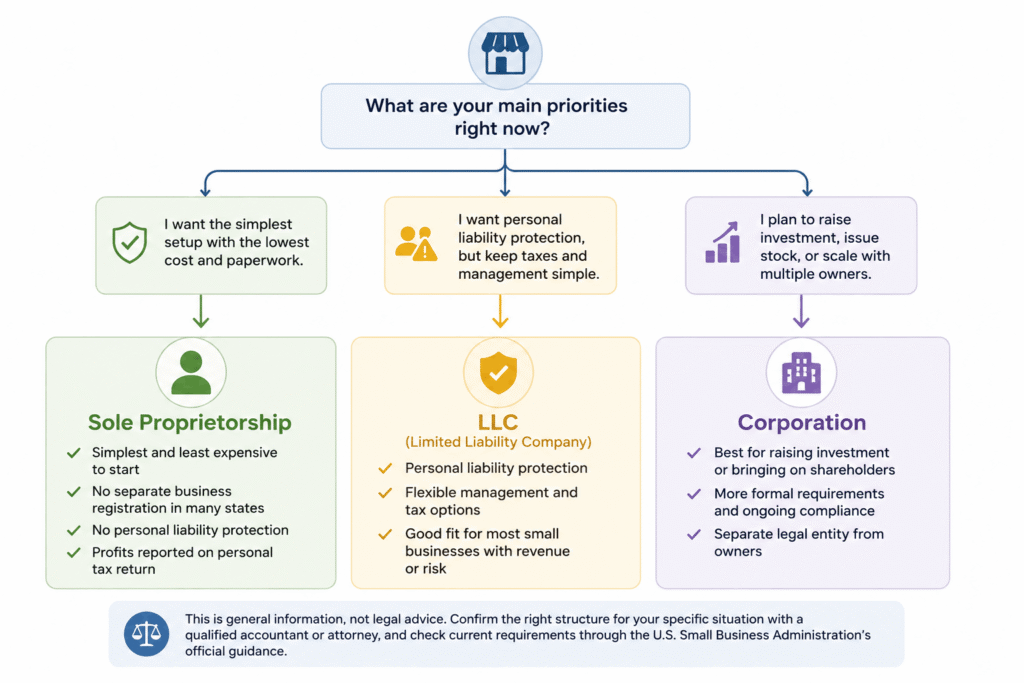
Most small businesses in the US start as one of a few common structures, and the right one depends on your liability tolerance and tax situation.
- Sole proprietorship: the simplest structure, with no separate business registration required in many states, though it offers no personal liability protection.
- LLC (Limited Liability Company): separates personal and business liability, and is a common choice once a business has real revenue or risk exposure.
- Corporation: generally more relevant for businesses planning to raise investment or bring on multiple shareholders, with more formal reporting requirements.
This is general information, not legal advice. Confirm the right structure for your specific situation with a qualified accountant or attorney, and check current requirements through the U.S. Small Business Administration’s official guidance.
Common Startup Tools Worth Knowing About
Most of the ideas on this list rely on a similar core toolkit, regardless of industry.
- Canva: for basic design work without needing professional design software.
- Google Workspace: for email, documents, and scheduling.
- Stripe: for accepting online payments.
- Zoom: for client calls and virtual services like coaching or tutoring.
- Calendly: for client scheduling without back-and-forth emails.
- QuickBooks: for basic bookkeeping and invoicing.
Frequently Asked Questions
What are the best small business ideas to start?
Virtual assistant services, cleaning businesses, and social media management are consistently strong picks, since they combine real demand with relatively low startup costs.
What are easy businesses to start with little money?
Virtual assistant work and copywriting are among the easiest to start, since both can begin with under $500 and no specialized equipment.
What are the most profitable businesses to start?
AI consulting, specialized coaching, and subscription-based service models tend to show the strongest margins, largely due to low overhead relative to what clients pay.
What are good business startup ideas for beginners?
Service-based ideas like virtual assistant work, cleaning, and tutoring are generally easier for first-time founders, since they require less upfront capital and can be tested part-time before a full commitment.
Do I need to register my business before starting?
In most cases, yes, though requirements vary by state and business structure. You can check here for current registration requirements by state, since rules and fees are updated periodically.
Which business has the highest profit margin?
AI consulting and specialized coaching tend to show the highest margins on this list, since both are knowledge-based with low ongoing overhead relative to what clients pay.
Can I start a business while working full time?
Yes, many of the ideas here, including virtual assistant work, copywriting, and bookkeeping, are commonly started as a side hustle before transitioning to full time.
Which businesses can be run from home?
Virtual assistant services, copywriting, bookkeeping, AI consulting, social media management, web design, and graphic design can all be run entirely from home.
Which businesses need a license?
Handyman services and health and wellness coaching are the two most likely to require specific licensing or certification, depending on your state and exact services offered.
Which businesses scale the fastest?
Online courses and vending machine businesses tend to scale fastest, since both can grow revenue without requiring proportionally more of your personal time.
Common Mistakes When Choosing a Business Idea
- Picking a trend instead of a genuine skill fit: a currently popular idea won’t sustain you if it doesn’t match your actual strengths.
- Underestimating true startup costs: many founders budget for equipment but forget marketing, insurance, or licensing costs.
- Not validating demand before committing fully: testing an idea part-time or with a small pilot group reduces the risk of a larger, costlier mistake.
- Ignoring local licensing requirements: several ideas on this list, including handyman services and cleaning businesses, have state-specific rules worth checking early.
- Trying to serve everyone instead of a specific niche: narrower positioning consistently outperforms generic, broad service offerings in a crowded market.
Final Recommendation
If you want the fastest, lowest-cost start, virtual assistant services or copywriting let you begin within days. If you want a more scalable, semi-passive model, a vending machine business or online course rewards more upfront setup with less ongoing time. If you have trade or wellness certifications already, handyman services or health coaching let you monetize existing skills immediately.
Conclusion
The best small business idea depends on your existing skills, available budget, and how much time you can realistically commit each week. Match your situation against the categories above, validate demand before investing heavily, and check your state’s specific registration and licensing rules through the U.S. Small Business Administration before you launch.
Sources
- U.S. Small Business Administration (SBA), official business registration and planning guidance
- U.S. Census Bureau, new business application data
- Industry market size and growth data from named categories (wellness, pet services, online education, vending)