How to Cook Asparagus: 8 Methods, Compared
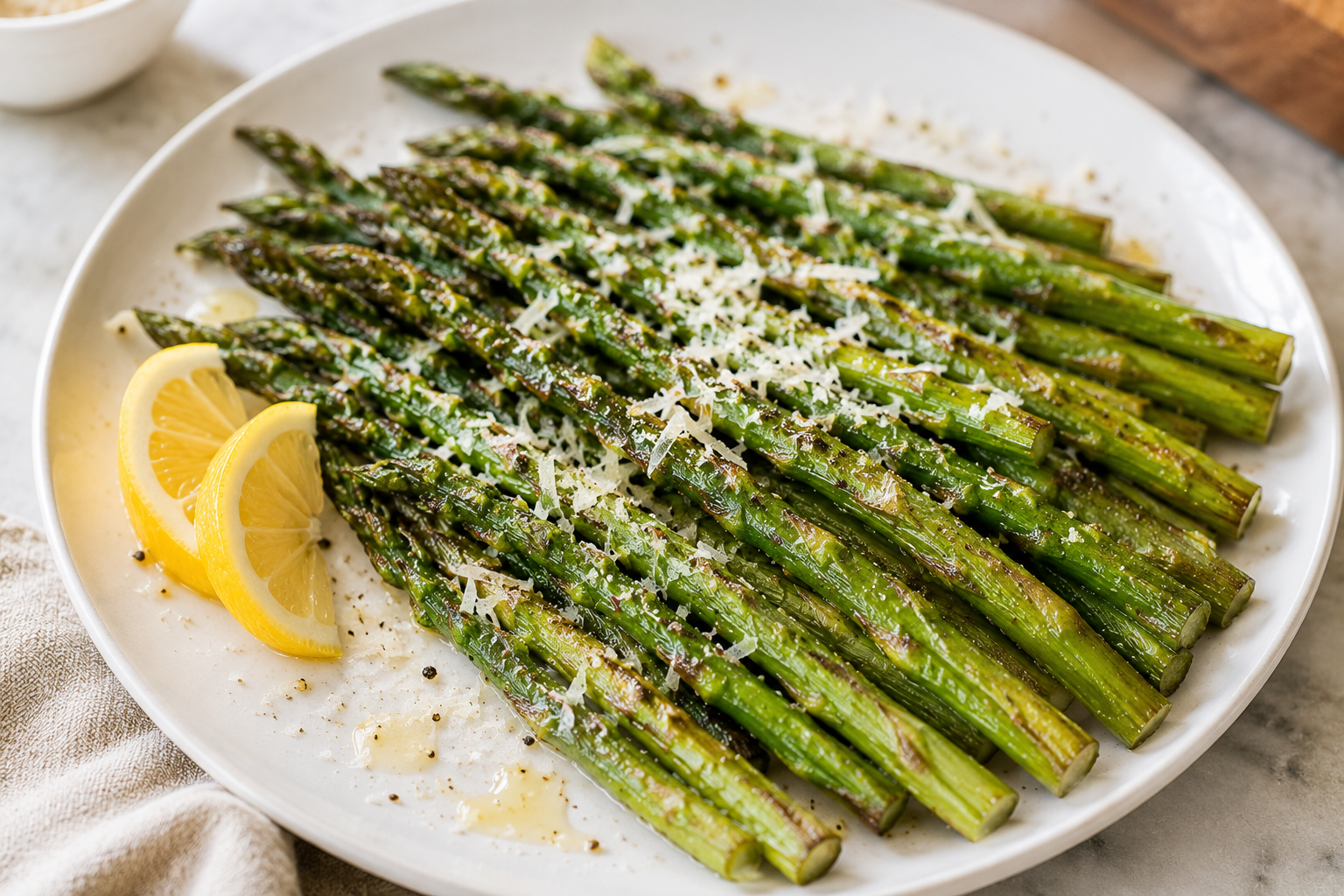
Asparagus cooks in minutes, but the method you choose changes the result more than almost any other vegetable. Roasting gives you caramelised, crisp tips. Steaming keeps it bright green and delicate. The air fryer has become one of the most popular ways to cook asparagus, delivering roasted-style flavour in less time than the oven.
This guide covers how to cook asparagus using eight reliable methods, with exact times by thickness, doneness cues, and the trimming trick most recipes skip over.
Who this guide is for: home cooks wanting a quick side dish, anyone unsure how to trim asparagus properly, and cooks comparing methods for a specific meal or occasion.
Last verified: July 2026.
How to Choose and Trim Asparagus
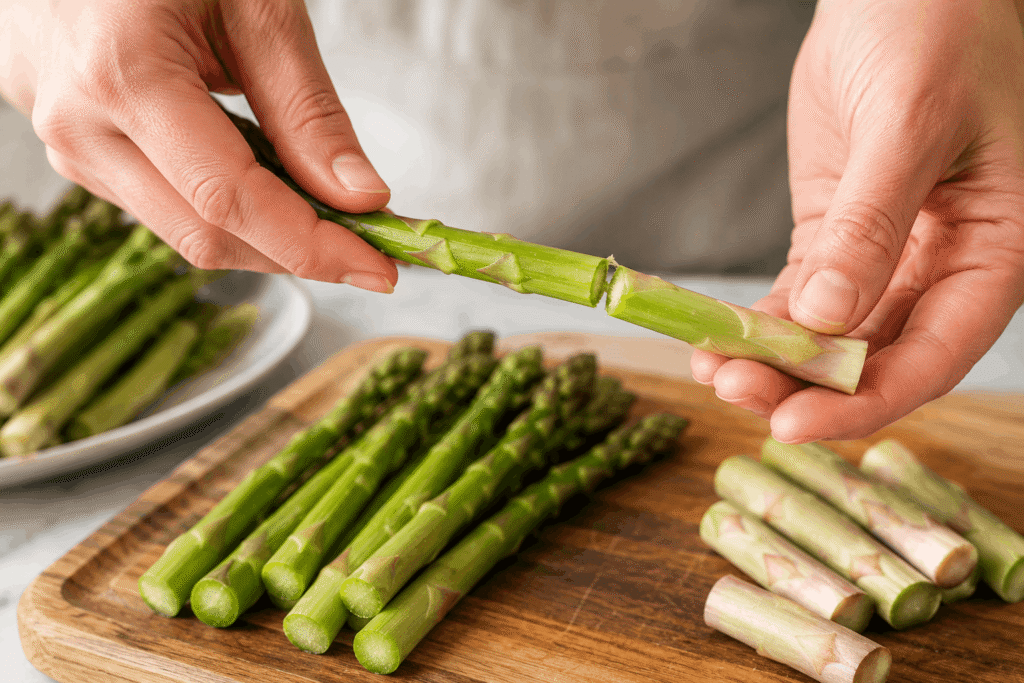
Look for firm, bright green spears with tightly closed, compact tips. Thinner spears cook faster and work well for quick sautés, while thicker spears hold up better to grilling and roasting.
The snap test: rather than guessing where to cut, hold a spear near the bottom and bend it gently. It naturally snaps at the point where the tender stalk meets the tough, woody end, which is more reliable than cutting at a fixed measurement, since that woody point varies by bunch.
Should you peel thick asparagus? Very thick spears can have a fibrous outer skin near the base. Peeling the bottom third with a vegetable peeler creates a more tender texture, though thinner spears generally don’t need this step.
Quick Comparison: Asparagus Cooking Methods
| Method | Time | Best For | Texture |
| Roasting | 10 to 12 minutes | Caramelized flavor, hands-off cooking | Crisp-tender, browned tips |
| Air frying | 6 to 8 minutes | Fast, roasted-style flavor with less heat-up time | Crisp-tender, lightly browned |
| Grilling | 5 to 7 minutes | Smoky char, outdoor cooking | Charred, tender-crisp |
| Blanching | 1 to 2 minutes | Salads, cold dishes, meal prep | Bright green, crisp |
| Sautéing | 4 to 6 minutes | Quick weeknight side | Tender with light browning |
| Steaming | 4 to 6 minutes | Preserving color and nutrients | Delicate, tender |
| Broiling | 3 to 5 minutes | Fast char without a grill | Charred edges, tender center |
| Microwaving | 2 to 4 minutes | Fastest possible method | Soft, tender |
Times vary by spear thickness, so thinner spears generally cook faster than the ranges above and thicker spears may need slightly longer.
Temperature at a Glance
| Method | Temperature |
| Roasting | 425°F |
| Air frying | 400°F |
| Grilling | Medium-high heat |
| Broiling | High |
| Steaming | Simmering |
| Microwaving | High |
Cooking Time by Thickness
| Thickness | Roasting | Steaming | Grilling | Air Frying |
| Thin | 8 to 10 minutes | 3 to 4 minutes | 4 to 5 minutes | 5 to 6 minutes |
| Medium | 10 to 12 minutes | 4 to 5 minutes | 5 to 7 minutes | 6 to 8 minutes |
| Thick | 12 to 15 minutes | 6 to 7 minutes | 7 to 9 minutes | 8 to 10 minutes |
Actual times vary by oven, grill, and air fryer model, so check with a spear for doneness a minute or two before the low end of the range.
Best Method for Your Situation
- Best for a hands-off side dish: roasting
- Best for the fastest roasted-style result: air frying
- Best for outdoor grilling season: grilling
- Best for salads or make-ahead meal prep: blanching
- Best for a fast weeknight side: sautéing or pan-frying
- Best for preserving nutrients and color: steaming
- Best for a quick char without firing up the grill: broiling
- Best for the absolute fastest option: microwaving
How to Cook Asparagus by Method
Roasting
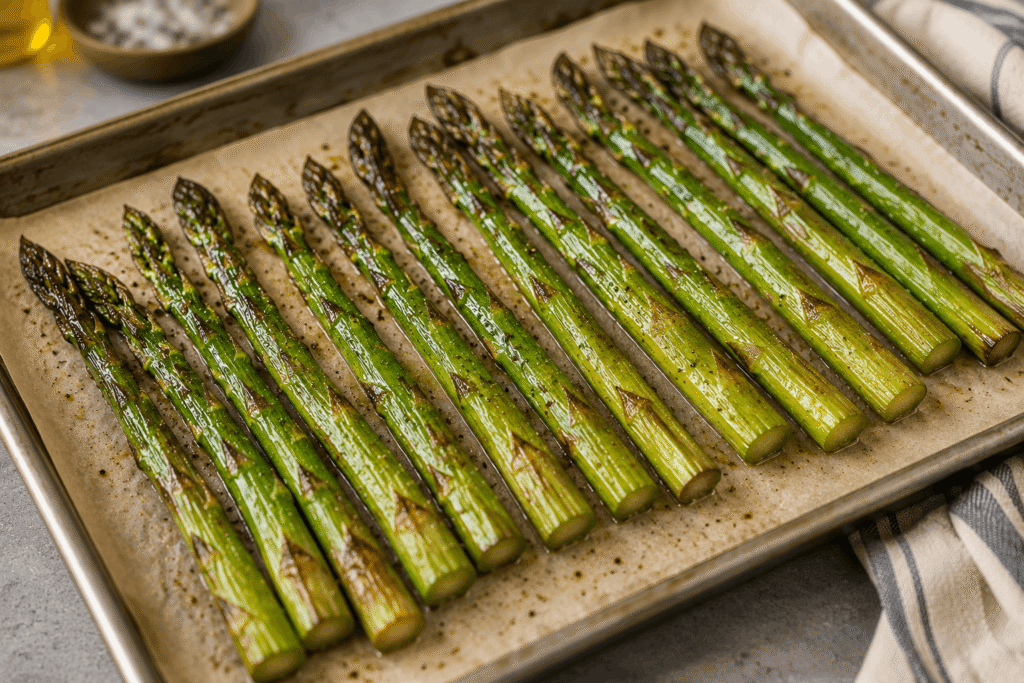
Best for: a hands-off side dish with deep, caramelised flavour.
Time and temperature: 10 to 12 minutes at 425°F.
Steps: trim the spears, toss with 1 to 2 teaspoons of olive oil per pound of asparagus, plus salt and pepper, and spread in a single layer on a parchment-lined baking sheet with space between each spear. Crowding the pan causes the asparagus to steam instead of crisp.
Who should skip this: anyone in a hurry, since roasting takes longer than most other methods here.
Pro tip: a squeeze of lemon juice after roasting brightens the caramelised flavour without needing extra salt.
Air Frying
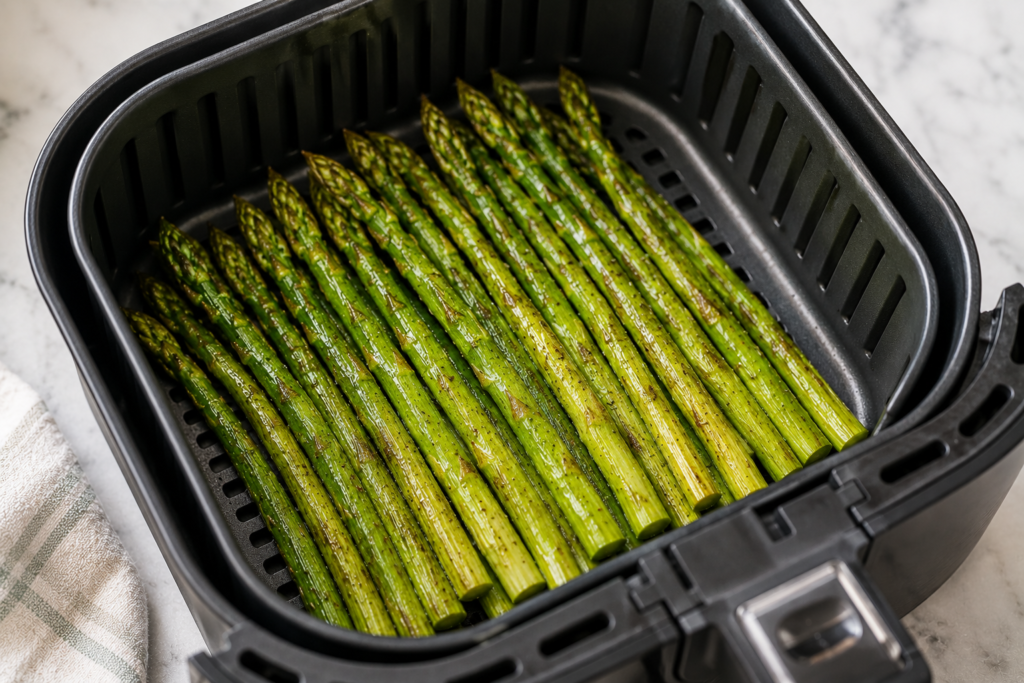
Best for: a roasted-style result without heating the whole oven.
Time and temperature: 6 to 8 minutes at 400°F, shaking the basket halfway through.
Steps: Toss trimmed spears with oil, salt, and pepper arrange in a single layer in the air fryer basket and cook until tender with lightly browned tips.
Who should skip this: anyone cooking a large batch at once, since air fryer baskets hold less than a sheet pan and may require cooking in batches.
Pro tip: avoid overcrowding the basket. Asparagus piled on top of itself won’t crisp evenly.
Grilling
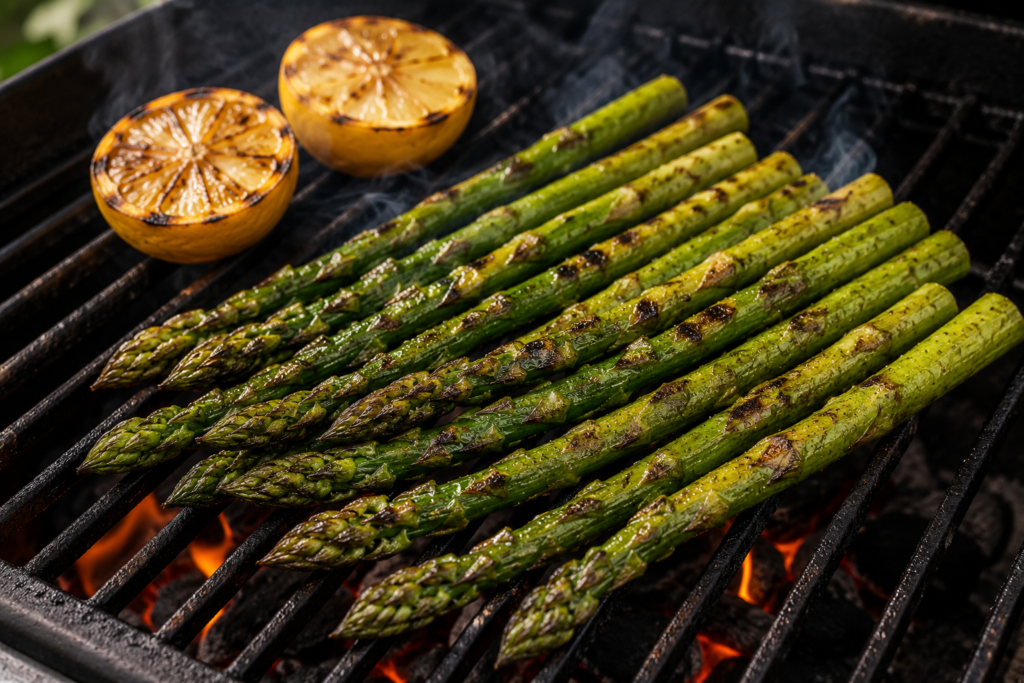
Best for: smoky char and outdoor cooking season.
Time and temperature: 5 to 7 minutes over medium-high heat.
Steps: toss trimmed spears in oil, place directly on the grill grates perpendicular to the bars so they don’t fall through, and turn once or twice until lightly charred.
Who should skip this: anyone without outdoor grill access, though a grill pan indoors can approximate the effect.
Pro tip: grilling lemon halves alongside the asparagus and squeezing the charred juice over the finished spears adds a deeper flavour than fresh lemon alone.
Blanching
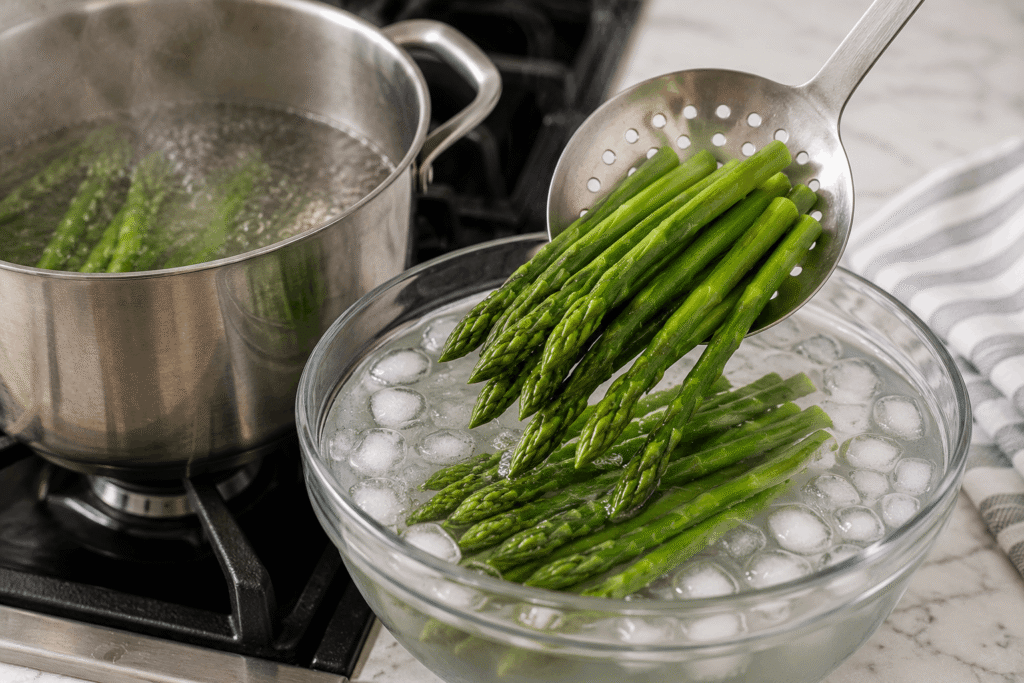
Best for: salads, cold asparagus dishes, and meal prep.
Time and temperature: 1 to 2 minutes in boiling salted water, then immediately transferred to an ice-water bath.
Steps: boil water, drop in trimmed spears or chopped pieces, cook briefly until bright green and just tender, and then shock in ice water to stop the cooking and lock in colour. Salting the water helps season the asparagus and supports its bright green colour as it cooks.
Who should skip this: anyone wanting caramelised flavour, since blanching produces a fresh, crisp result rather than browning.
Pro tip: the ice bath step matters as much as the boiling itself. Skipping it lets residual heat overcook the spears even after draining.
Sautéing
Best for: a fast weeknight side with minimal cleanup.
Time and temperature: 4 to 6 minutes over medium-high heat in a skillet.
Steps: heat oil or butter in a skillet, add trimmed spears, and cook, stirring occasionally, until tender with light browning on the edges.
Who should skip this: anyone wanting hands-off cooking, since sautéing requires attention at the stove throughout.
Pro tip: adding minced garlic in the last minute, rather than at the start, prevents it from burning while the asparagus finishes cooking.
Steaming
Best for: preserving colour, texture, and nutrients better than most other methods.
Time and temperature: 4 to 6 minutes over simmering water using a steamer basket.
Steps: Bring an inch of water to a simmer in a pot fitted with a steamer basket, add trimmed spears, cover, and steam until tender but still bright green.
Who should skip this: anyone wanting browned or charred flavour, since steaming produces a purely tender, mild result.
Pro tip: finishing steamed asparagus with melted butter and a pinch of salt right after cooking helps it absorb flavour while still warm.
Broiling
Best for: a quick char indoors without a grill.
Time and temperature: 3 to 5 minutes under a broiler on high.
Steps: toss trimmed spears in oil, spread on a baking sheet, and broil close to the heat source, watching closely since broilers vary in intensity and can burn asparagus quickly.
Who should skip this: anyone without a reliable broiler, since uneven broilers can char unevenly.
Pro tip: flipping the spears halfway through ensures even charring on both sides.
Microwaving
Best for: the fastest possible cooking method, especially for a single small portion.
Time and temperature: 2 to 4 minutes on high, depending on thickness.
Steps: place trimmed spears in a microwave-safe dish with 1 to 2 tablespoons of water, cover, and microwave until tender, checking at the 2-minute mark for thinner spears.
Who should skip this: anyone wanting any browning or char, since microwaving only steams the spears without adding colour or crisp texture.
Pro tip: covering the dish traps steam and cooks the asparagus more evenly than leaving it uncovered.
Can You Cook Frozen Asparagus?
Yes. Frozen asparagus can be roasted, air-fried, steamed, or sautéed directly from frozen, without thawing first. Expect cooking times to increase by about 2 to 4 minutes compared to fresh spears, and pat any excess ice off before cooking to avoid excess moisture in the pan.
Best Seasonings for Asparagus
- Olive oil and flaky salt
- Garlic, minced or roasted
- Fresh lemon juice or zest
- Grated Parmesan
- Cracked black pepper
- Melted butter
- Red chili flakes for heat
- A drizzle of balsamic glaze
How Do You Know Asparagus Is Done?
Properly cooked asparagus bends slightly without collapsing and remains bright green, whether roasted, steamed, or sautéed. It should pierce easily with a fork while still holding some structure, rather than going fully soft or mushy.
Common Mistakes When Cooking Asparagus
- Overcooking until mushy: asparagus goes from tender-crisp to mushy quickly, so check it a minute or two before your timer goes off.
- Forgetting to trim the woody ends: skipping this step leaves a tough, fibrous bite at the base of every spear.
- Crowding the pan: too many spears in one layer causes steaming instead of browning, especially when roasting or air frying.
- Not drying spears after washing: excess water on the surface prevents proper browning in high-heat methods like roasting or sautéing.
- Skipping the ice bath after blanching: residual heat continues cooking the spears even after draining, leading to overcooked results.
What Goes Well with Asparagus?
Asparagus pairs well with steak, grilled salmon, roast chicken, pasta dishes, and eggs, making it a flexible side for both weeknight dinners and more formal meals.
Nutrition Notes
Asparagus is naturally low in calories and provides fibre, folate, and vitamins A, C, and K. Steaming and blanching tend to preserve more water-soluble nutrients than methods using longer cook times, though the difference is generally modest for a vegetable that cooks as quickly as asparagus does overall.
Storage and Reheating
Storing fresh asparagus: Keep it upright in a jar with an inch of water, loosely covered with a plastic bag, similar to a bouquet of flowers. Change the water every day or two if storing for several days. Stored this way in the refrigerator, it typically stays fresh for about a week, noticeably longer than asparagus wrapped flat in a bag.
How long does cooked asparagus last? Refrigerate cooked asparagus in an airtight container for 3 to 4 days.
Reheating: a skillet over medium heat for a couple of minutes works best for restoring some texture. The oven at 350°F for about 5 minutes is a good hands-off option. The microwave works in a pinch but tends to soften the spears further, so it’s best for dishes where texture matters less, like folding leftovers into a frittata.
Frequently Asked Questions
How do you know when asparagus is done?
Asparagus is done when it turns bright green and can be easily pierced with a fork while still holding some firmness, rather than turning fully soft or mushy.
How do you trim asparagus?
Bend each spear near the bottom until it naturally snaps at the point where the tender stalk meets the tough, woody end, rather than cutting at a fixed measurement.
What is the healthiest way to cook asparagus?
Steaming and blanching tend to preserve slightly more nutrients than roasting or grilling, since both use shorter cook times and less direct heat exposure.
Can you eat asparagus raw?
Yes, thinly sliced or shaved raw asparagus works well in salads, though it has a firmer, more fibrous texture than any cooked preparation.
How long does asparagus last in the fridge?
Stored upright in water like a bouquet of flowers, fresh asparagus typically lasts about a week, longer than asparagus stored flat in its original packaging.
How long do you cook asparagus in an air fryer?
Around 6 to 8 minutes at 400°F, shaking the basket halfway through, though thinner spears may be done closer to 5 minutes.
Can you microwave asparagus?
Yes. Place trimmed spears in a covered, microwave-safe dish with a tablespoon or two of water and microwave for 2 to 4 minutes depending on thickness.
Should asparagus be washed before cooking?
Yes. Rinse asparagus under cool running water to remove dirt or sand, then pat it dry thoroughly before roasting, grilling, or sautéing to help it brown properly.
Final Recommendation
If you want the easiest hands-off method, roast it. If you want that same roasted flavour faster, the air fryer gets you there in less time. If you’re meal prepping salads, blanch them so they stay crisp and bright for days in the fridge.
Conclusion
The best way to cook asparagus depends on what you’re serving it with and how much attention you want to give it at the stove. Try the snap test on your next bunch to find the natural trim point, then pick the method above that matches your meal, whether that’s a five-minute air fryer side or a charred batch off the grill.
Sources
- USDA FoodData Central, asparagus nutrition data
- General food safety and storage guidance from university extension programs