Things to Do in Tokyo in 2026
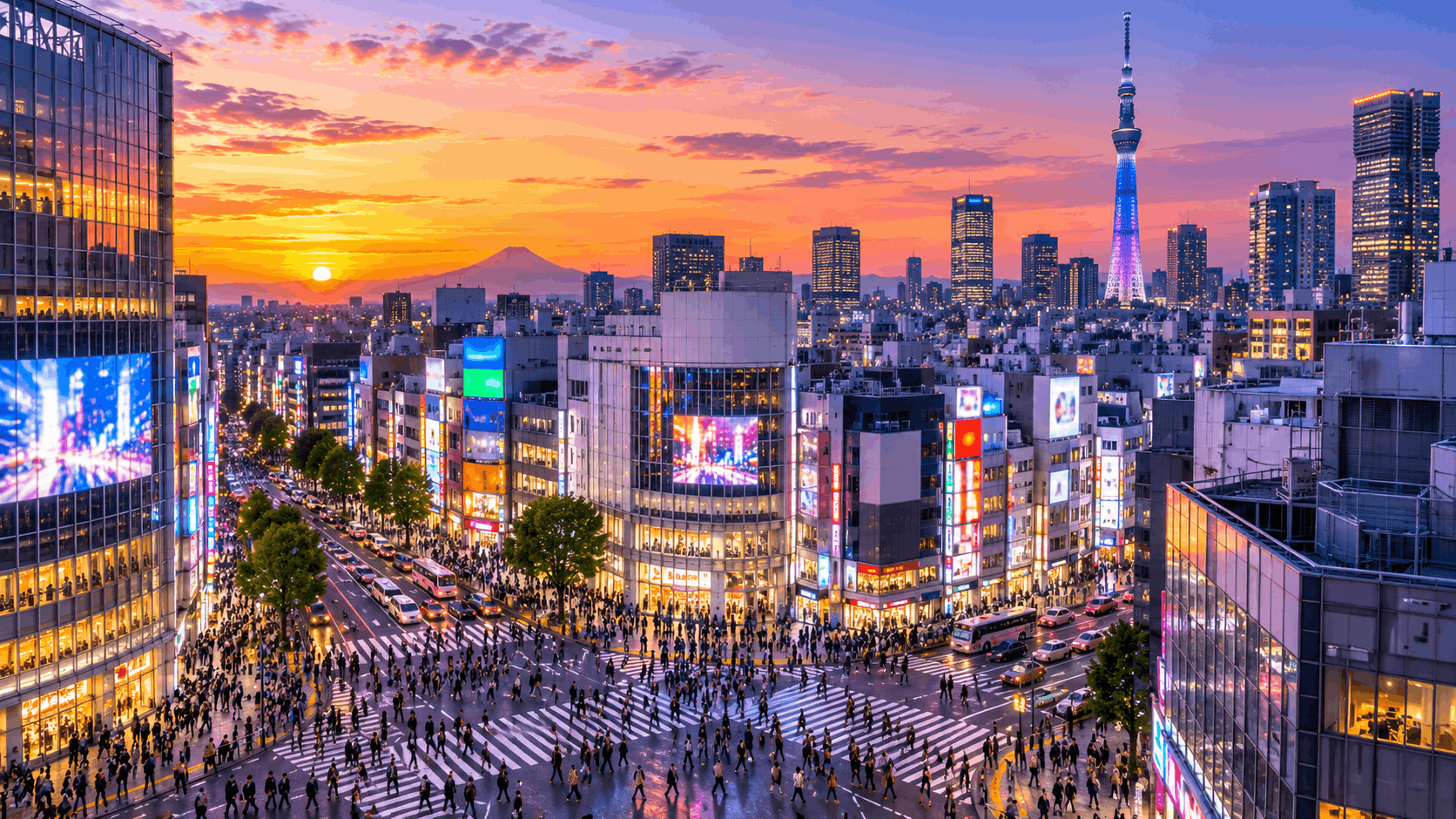
Tokyo is a city of contrasts: centuries-old shrines sit a few train stops from neon-lit crossings, and quiet gardens border some of the busiest streets on earth. With around 37 million people in the greater metro area, it can feel overwhelming to plan around.
This guide covers things to do in Tokyo, organized by neighbourhood, budget, and travel style, so you can build a realistic itinerary instead of a single overwhelming list.
Who this guide is for: first-time visitors, families with kids, budget travellers, and anyone trying to decide which Tokyo neighbourhoods actually match their interests.
Last verified: July 2026. Hours, reservation requirements, and ticket prices change, so confirm current details before your trip.
How We Chose These Activities
Every activity here was evaluated against the same criteria, so the list stays consistent rather than random.
- A genuine reason it stands out, not just general popularity
- Coverage across Tokyo’s major neighborhoods, not just the most famous ones
- A mix of paid attractions and free activities
- Practical logistics, including reservation requirements and typical crowd levels
- Suitability across different traveler types, including families
Neighborhood Comparison: Where to Go for What
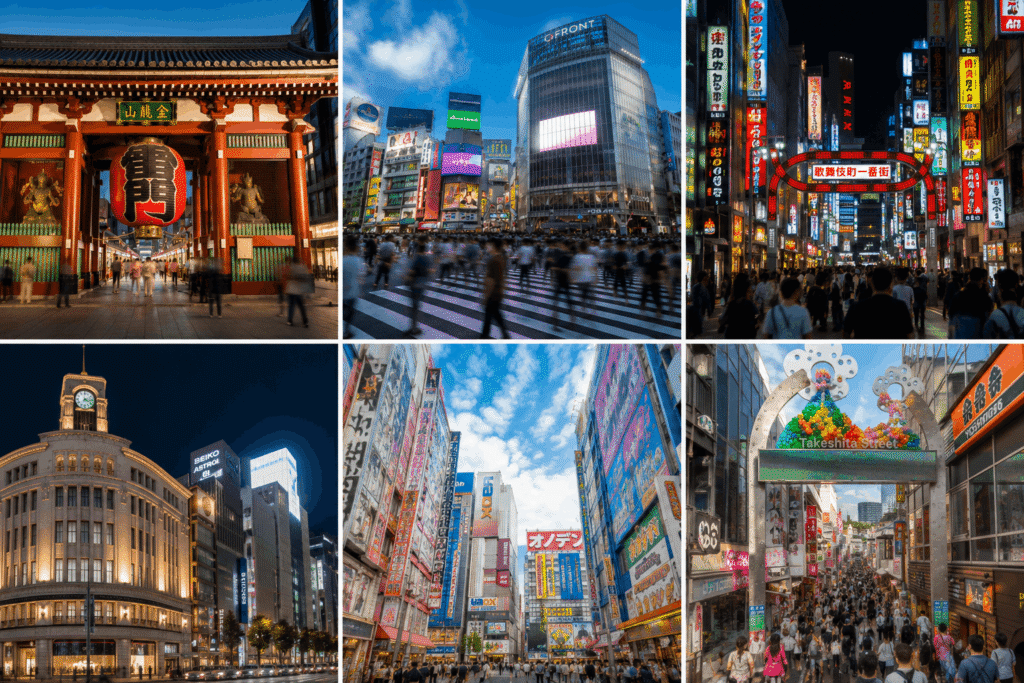
| Area | Best For |
| Asakusa | Traditional Tokyo, temples |
| Shibuya | Nightlife, youth culture |
| Shinjuku | Food, bars, nightlife |
| Ginza | Luxury shopping, refined dining |
| Akihabara | Anime, gaming, electronics |
| Ueno | Museums, parks, the zoo |
| Harajuku | Fashion, quirky food |
[Map suggestion: an embedded Tokyo map marking Shibuya, Shinjuku, Asakusa, Ginza, Ueno, Akihabara, and Tokyo Station, to show how these areas relate to each other geographically]
Best Areas to Stay in Tokyo
| Area | Best For |
| Shinjuku | Nightlife and easy access to trains |
| Shibuya | First-time visitors wanting central energy |
| Ginza | Luxury travelers |
| Ueno | Budget travelers |
| Asakusa | A quieter, more traditional base |
| Tokyo Station area | Travelers prioritizing transportation links |
Typical Daily Budget in Tokyo
| Travel Style | Estimated Daily Spend (Per Person) |
| Budget | ¥8,000 to ¥12,000 |
| Mid-range | ¥18,000 to ¥30,000 |
| Luxury | ¥45,000 or more |
These estimates cover accommodation, food, local transport, and one paid activity per day. Actual costs vary widely by season, neighbourhood, and personal spending habits, so treat this as a planning starting point rather than a fixed budget.
Typical Food Costs in Tokyo
| Item | Typical Cost |
| Bowl of ramen | ¥900 to ¥1,400 |
| Sushi lunch set | ¥1,500 to ¥3,000 |
| Coffee | Around ¥500 |
| Convenience store meal | ¥500 to ¥800 |
Prices vary by neighbourhood and specific restaurant, so treat these as general planning estimates.
Is Tokyo Safe?
Tokyo is consistently ranked among the safest major cities in the world, with low rates of violent crime. That said, normal travel awareness still applies, especially around crowded stations during rush hour and in nightlife districts late at night.
Accessibility in Tokyo
Many train stations now have elevators and step-free routes, and accessibility has continued to improve across the city in recent years, though older stations may still have limited options. If accessibility is a priority, checking a specific station’s facilities in advance is worth the extra few minutes, especially for smaller stations outside the main tourist areas.
Best Viewpoint Comparison
| Viewpoint | Cost | Best For |
| Tokyo Skytree | $$ | The highest, most iconic view |
| Shibuya Sky | $$ | Sunset views over the crossing |
| Tokyo Metropolitan Government Building | Free | Budget-friendly comparable views |
Best Time to Visit Tokyo
Best months: April, May, October, and November generally offer the most comfortable weather and the best balance of pleasant conditions and manageable crowds.
- Spring (March to May): cherry blossom season, especially late March to early April, draws the biggest crowds of the year, so book well ahead if this is your priority.
- Summer (June to August): hot and humid, but also when many of Tokyo’s biggest festivals and fireworks displays happen.
- Autumn (September to November): milder weather and fall foliage, generally considered one of the most comfortable times to visit.
- Winter (December to February): cold but dry, with seasonal illuminations lighting up areas like Shibuya and Marunouchi through December.
Quick Comparison: Top Things to Do in Tokyo
| Activity | Neighborhood | Time Needed | Cost Level |
| Senso-ji Temple | Asakusa | 60 to 90 minutes | Free |
| Meiji Shrine | Harajuku/Shibuya | 45 to 60 minutes | Free |
| Shibuya Crossing | Shibuya | 30 minutes | Free |
| teamLab | Toyosu/Azabudai | 2 to 3 hours | $$ |
| Tokyo Skytree | Sumida | 1.5 to 2 hours | $$ |
| Ghibli Museum | Mitaka | 2 to 3 hours | $ |
| Tsukiji Outer Market | Tsukiji | 1 to 2 hours | $ to $$ |
| Akihabara | Akihabara | 2 to 3 hours | Free to $$ |
| Ueno Park | Ueno | 2 to 4 hours | Free to $ |
Costs and time estimates are general and vary by season and how much you pack into a visit, so treat these as planning guidelines rather than fixed numbers.
Things to Do in Tokyo by Category
- Best overall first visit: Senso-ji Temple and Asakusa
- Best for a quiet moment: Meiji Shrine
- Best unique experience: teamLab
- Best free activity: Shibuya Crossing and Meiji Shrine
- Best for kids: Tokyo Skytree and teamLab
If You Only Have…
- One day: Senso-ji Temple in the morning, Ueno Park midday, then Shibuya or Shinjuku in the evening.
- Three days: add teamLab, Tokyo Skytree, and a full afternoon in Akihabara or Ginza.
- Five days: Add a day trip beyond the city (Nikko or Kamakura are common choices), plus more unstructured time to wander neighbourhoods you enjoyed.
How Many Days Should You Spend in Tokyo?
- 2 days: enough for the essentials, Asakusa, Shibuya, and one major attraction like teamLab or Tokyo Skytree, but expect to move quickly.
- 3 days: a more comfortable pace, adding a neighbourhood like Akihabara or Ginza and one museum in Ueno.
- 5 days: enough time to add a day trip outside the city and slow down in neighbourhoods you enjoy most.
- 7 days: allows for two day trips, a more relaxed pace throughout, and time to revisit a favourite area.
Travel Times Between Key Areas
| From | To | Approximate Time |
| Asakusa | Tokyo Skytree | 20 minutes by train |
| Shibuya | Harajuku | 15 minutes on foot |
| Shibuya | Shinjuku | 15 to 20 minutes by train |
| Ueno | Akihabara | 10 minutes by train |
| Tokyo Skytree | Shibuya | 30 to 40 minutes by train |
Sample One-Day Tokyo Itinerary
Approximate walking for a day like this: 18,000 to 22,000 steps, so comfortable shoes matter more than usual.
- Morning: Senso-ji Temple and the Nakamise shopping street in Asakusa.
- Lunch: Tsukiji Outer Market or a casual spot in Asakusa.
- Late afternoon: Tokyo Skytree, about a 20-minute train ride from Asakusa.
- Sunset: Shibuya Sky or the Shibuya Crossing viewing area, roughly 30 to 40 minutes from Skytree by train.
- Dinner: Shinjuku’s Omoide Yokocho or Golden Gai, a short train ride from Shibuya.
- Night: continue into Shinjuku’s bars, or head back to your hotel if you’re ready to call it a day.
First day in Tokyo? Keep it light if you can. Jet lag combined with a full day of walking can be more exhausting than travellers expect, so consider saving your most packed day for day two or three instead.
Best Things to Do in Tokyo
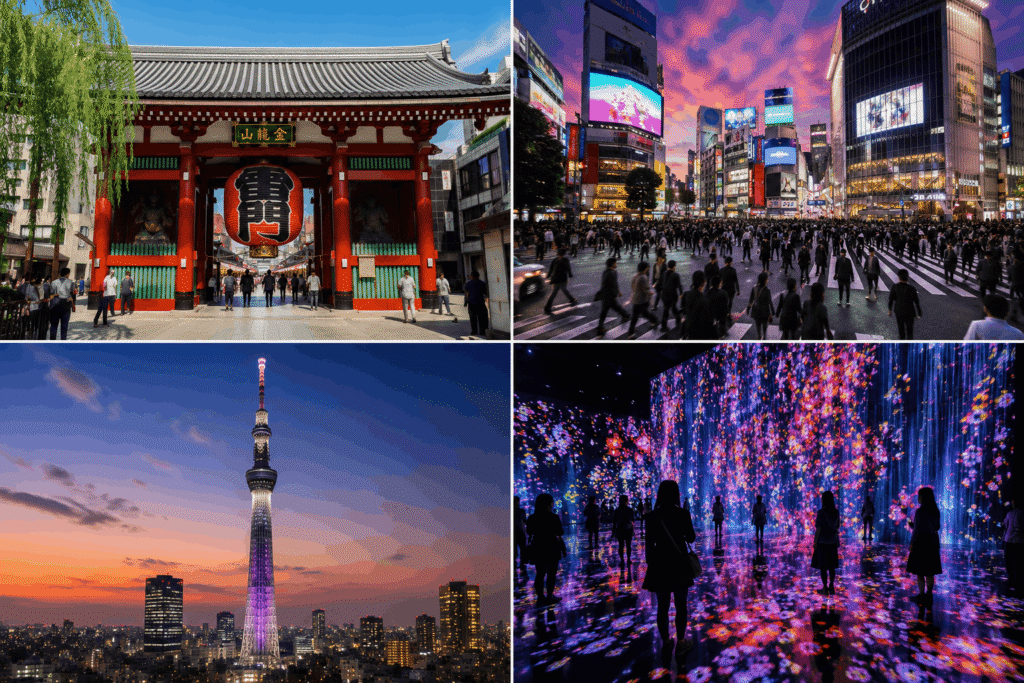
These are the attractions most consistently recommended for a first Tokyo visit.
Senso-ji Temple and Asakusa
Senso-ji is Tokyo’s oldest temple, and the surrounding Asakusa district still carries an older, slower atmosphere than most of the city.
Best for: first-time visitors wanting a manageable introduction to Tokyo’s history and culture.
Time needed: 60 to 90 minutes for the temple grounds and Nakamise street.
Opening hours: The temple grounds are always open, though Nakamise Shopping Street shops typically operate from around 9am to 6pm.
Why it stands out: The approach through Nakamise Shopping Street, lined with small food stalls, gives a genuine sense of old Tokyo before you even reach the temple gates.
Who should skip this: travellers who dislike crowds, since Asakusa draws heavy foot traffic, especially on weekends.
Practical tip: arriving early in the morning, before major tour groups, tends to mean a noticeably quieter visit to the temple grounds.
Meiji Shrine
Meiji Shrine sits inside a forest of more than 100,000 trees donated from across Japan, which makes it feel remarkably separate from the city around it.
Best for: travellers wanting a calm break between busier stops in Harajuku and Shibuya.
Time needed: 45 to 60 minutes.
Opening hours: roughly sunrise to sunset, with exact times shifting by season.
Why it stands out: the shrine works as a genuine cut-through between neighbourhoods, so it fits naturally into a day that also includes Harajuku’s shopping streets.
Who should skip this: travellers with very limited time who need to prioritize only the most iconic sights, since the shrine rewards a slower pace rather than a quick photo stop.
Practical tip: weekends often bring traditional wedding processions through the shrine grounds, which is worth timing a visit around if you’re interested in seeing one.
teamLab
teamLab’s immersive digital art exhibits have become one of Tokyo’s most talked-about modern attractions, blending technology and art in a way that’s genuinely hard to describe secondhand.
Best for: travellers wanting a distinctly modern Tokyo experience alongside the city’s historic sites.
Time needed: 2 to 3 hours to see a single location without rushing.
Why it stands out: rooms respond to visitors’ movement in real time, which makes the experience feel different on every visit, even to the same exhibit.
Who should skip this: travellers who prefer traditional museums, since teamLab is intentionally abstract and light-and-sound-driven rather than object-based.
Reservation needed: yes, tickets are timed and often sell out on weekends. Booking one to three weeks ahead is generally enough outside peak seasons, though popular time slots during holidays can sell out faster.
Practical tip: You can check here for current locations and ticket availability since teamLab has moved and expanded its exhibits across different Tokyo venues in recent years.
Tokyo Skytree
At 634 metres, Tokyo Skytree is the tallest structure in Japan, and its observation decks offer a genuinely different view of the city than any rooftop bar.
Best for: travellers wanting a clear, elevated view of the city, especially on a clear day.
Time needed: 1.5 to 2 hours, including time in the Solamachi shopping complex at the base.
Opening hours: typically 10am to 9pm or 10pm, though this varies seasonally, so check the official website for your travel dates.
Estimated cost: the 350-meter Tembo Deck typically runs around ¥1,800 to ¥2,400 online, with the combo ticket including the 450-metre Tembo Galleria running around ¥2,700 to ¥3,400. Prices vary by date and online versus counter purchase, so confirm current pricing on the official site before you go.
Who should skip this: travellers on a tight budget, since ticket prices for the higher observation deck add up quickly for a family.
Reservation needed: not required, but booking online in advance is generally cheaper and avoids a same-day counter surcharge.
Practical tip: Visiting near sunset lets you see the city in daylight and lit up at night in a single visit, without paying for two separate trips up.
Ghibli Museum
The Ghibli Museum, dedicated to Studio Ghibli’s animated films, is a small, whimsical space that rewards fans of the studio’s work.
Best for: fans of Studio Ghibli films, regardless of age.
Time needed: 2 to 3 hours.
Who should skip this: travellers without a genuine interest in Ghibli’s films, since the museum is intentionally quirky and abstract rather than a straightforward exhibit hall.
Reservation needed: yes, and this is one of the most important reservations to make early. Tickets often sell out roughly one month ahead and must be booked before arriving in Japan.
Practical tip: tickets go on sale on a fixed monthly schedule, so check the official sale dates rather than assuming you can book whenever you finalize your trip.
Things to Do in Akihabara, Tokyo
Akihabara is Tokyo’s anime, gaming, and electronics district, and it’s a genuinely different experience from anywhere else on this list.
Best for: fans of anime, manga, retro and modern gaming, and electronics shopping.
What to do there: browse multi-floor electronics stores; visit themed cafes, including maid cafes and explore arcades filled with claw machines and rhythm games.
Time needed: 2 to 3 hours, longer if you’re browsing multiple stores in depth.
Who should skip this: travellers without an interest in anime or gaming culture, since the district’s appeal is fairly specific.
Practical tip: many of the district’s arcades and shops are spread across multiple floors of narrow buildings, so it’s worth looking up, not just browsing street level.
Things to Do in Ueno, Tokyo
Ueno offers one of the highest concentrations of museums in the city, along with a large public park and zoo.
Best for: travellers interested in museums and families wanting a park with more to do than just walking.
What to do there: the Tokyo National Museum, Ueno Zoo, and Ueno Park’s walking paths are all within a short walk of each other.
Time needed: 2 to 4 hours, depending on how many museums you visit.
Who should skip this: travellers short on time who’ve already prioritized other museums elsewhere in the city.
Practical tip: Ueno Park is also one of the city’s most popular cherry blossom viewing spots in spring, so expect heavier crowds during that specific window.
Hidden Gems in Tokyo
Beyond the major districts, a few neighbourhoods reward travellers who want a quieter, more local side of the city.
- Yanaka: an old Tokyo neighbourhood that survived World War II bombing largely intact, known for narrow streets and a slower pace.
- Kagurazaka: a former geisha district with cobblestone alleys and a strong French restaurant scene, genuinely different in feel from most of Tokyo.
- Shimokitazawa: a bohemian neighbourhood known for vintage shops, small live music venues, and independent cafes.
- Kiyosumi Gardens: a traditional Japanese garden that draws far fewer crowds than more famous parks, ideal for a quiet break.
Unique Things to Do in Tokyo
Beyond the major sights, Tokyo offers experiences that are genuinely hard to find anywhere else.
- Street go-kart tours: driving a small go-kart through actual Tokyo streets, dressed in costume, past cars and buses, is one of the more unusual activities available to visitors, though opinions about it are mixed among locals. An international driving permit is required, so arrange this before you leave home.
- Purikura photo booths: Japanese photo booths that automatically enlarge your eyes and smooth your skin, common in areas like Takeshita Street in Harajuku, make for a genuinely funny souvenir.
- Karaoke booths: multi-floor karaoke buildings, rented by the room rather than performed on a public stage, are a common and surprisingly affordable night out.
- Visiting a Japanese convenience store (konbini): Japan’s 24-hour convenience stores are worth a stop in their own right, known for surprisingly good, fresh food options at almost any hour.
- Robot-themed and samurai-style entertainment shows: high-energy, neon-lit performances in Shinjuku, blending dancers, costumes, and loud music, offer a uniquely over-the-top Tokyo evening. The original Robot Restaurant closed, and current performances vary, so check what’s currently running before booking.
Tokyo Disneyland and DisneySea
Tokyo Disney Resort is one of Japan’s biggest attractions in its own right, and DisneySea in particular draws visitors who don’t consider themselves theme park people.
Best for: families, Disney fans, and travellers wanting a full day away from Tokyo’s temples and museums.
Time needed: a full day per park, and the two parks are separate, so visiting both means two separate days.
Why it stands out: DisneySea is unlike any other Disney park in the world, with a nautical theme and ports inspired by real places, including a Mediterranean harbour and an Arabian coast.
Who should skip this: travellers with limited time who’d rather spend a full day on Tokyo’s core neighbourhoods instead.
Reservation needed: yes, both parks use timed entry tickets that often sell out on weekends and holidays. Buying tickets before your trip, rather than assuming same-day availability, is the safest approach.
Is it worth it? For families and Disney fans, generally yes, especially DisneySea’s unique theming. For travellers without a strong interest in theme parks, the full day required competes directly with time you could spend exploring Tokyo’s neighbourhoods instead.
Things to Do in Tokyo with Kids
Tokyo is more family-friendly than its size might suggest, with several attractions built specifically for younger visitors.
- Tokyo Disneyland and DisneySea: covered in detail above and a strong full-day option for families.
- teamLab: the interactive, room-scale exhibits work well for kids, since much of the experience is about physical movement rather than reading exhibit text.
- Tokyo Skytree: the observation decks and surrounding shopping complex give families an easy half-day activity without much walking required.
- Ueno Park and Zoo: a large public park with a zoo, museums, and open lawn space, useful for a lower-key day between busier attractions.
If you’re planning a longer trip and want age-specific advice beyond Tokyo itself, our guide to family travel destinations covers planning around different ages in more depth.
Things to Do in Ginza, Tokyo
Ginza is Tokyo’s upscale shopping and dining district, known for flagship department stores and some of the city’s most refined restaurants.
Best for: travellers interested in shopping, design, and a more polished side of Tokyo.
What to do there: window shop along the main boulevard, visit a department store’s basement food hall (depachika) for high-quality bites, or catch a traditional performance at the Kabuki-za Theatre.
Who should skip this: budget travellers, since Ginza leans toward higher-end shopping and dining compared to nearby districts.
Practical tip: the main Ginza boulevard closes to car traffic on weekend afternoons, turning it into a pedestrian-only street, which is the most pleasant time to visit.
Things to Do in Shinjuku, Tokyo
Shinjuku is one of Tokyo’s busiest districts, home to the world’s busiest train station and a genuinely wide mix of experiences within walking distance of each other.
Best for: travellers wanting nightlife, dining, and an energetic, neon-lit atmosphere.
What to do there: wander the tiny bars of Golden Gai, grab skewers in the narrow alleys of Omoide Yokocho, or take in the free observation deck at the Tokyo Metropolitan Government Building.
Who should skip this: travellers wanting a calmer, quieter experience, since Shinjuku is intentionally one of the city’s most intense districts after dark.
Practical tip: the Tokyo Metropolitan Government Building’s observation deck is free and offers skyline views comparable to paid options like Tokyo Skytree.
Things to Do in Shibuya, Tokyo
Shibuya is best known for its famous scramble crossing, but the district offers plenty beyond that single photo stop.
Best for: travellers wanting shopping, youth culture, and easy access to nearby Harajuku.
What to do there: watch the crossing from an elevated cafe view, explore Shibuya Sky’s rooftop observation deck, or wander into nearby Harajuku for Takeshita Street’s shops and snacks.
Who should skip this: travellers looking for a quieter, less crowded experience during peak evening hours.
Practical tip: Shibuya’s energy shifts noticeably after dark, so visiting both during the day and in the evening gives a fuller sense of the district.
Free Things to Do in Tokyo
Tokyo offers a genuine mix of no-cost activities that hold up against its paid attractions.
- Meiji Shrine’s grounds: free to enter and explore, including its forested pathways and gardens.
- Shibuya Crossing: watching or crossing the intersection costs nothing, and many nearby cafes offer elevated views of the crossing if you buy a drink.
- Senso-ji Temple: The temple grounds and approach street are free to explore, though individual food stalls and souvenirs cost extra.
- Tokyo Metropolitan Government Building observation deck: a free alternative to paid observation decks like Tokyo Skytree, with genuinely comparable views.
- Konbini browsing: simply exploring a convenience store’s snack and drink selection costs nothing and doubles as a small cultural experience.
Best Food Experiences in Tokyo
Food is central to any Tokyo trip, and a few experiences stand out beyond just picking a restaurant.
- Sushi breakfast at Tsukiji Outer Market: fresh sushi eaten standing at a stall remains one of the most memorable casual meals in the city.
- Ramen: shops range from simple counter-service spots to well-known chains, and a single bowl rarely disappoints even at the lower end of the price range.
- Izakaya dining: casual, pub-style spots serving small plates and drinks, common in Shinjuku’s Omoide Yokocho, offer a genuinely social way to eat.
- Depachika food halls: the basement floors of department stores, especially in Ginza, sell high-quality prepared food and desserts worth browsing even if you’re not buying a full meal.
- Vending machines: Japan’s ubiquitous vending machines sell far more than cold drinks, and many also sell hot drinks and, in some locations, hot snacks, making them worth a curious stop.
Getting Around Tokyo
Buy or activate a Suica or PASMO IC card as soon as you arrive, or add a digital version to Apple Wallet before your trip if your phone supports it. Tokyo’s train and subway network is extensive but manageable once you understand the basics.
- IC cards (Suica or PASMO): a rechargeable card that works across nearly all trains, subways, and buses and removes the need to buy individual tickets for each ride. A digital Suica in Apple Wallet can save you from needing a physical card at all.
- JR lines vs. Tokyo Metro: the city runs on two main systems, JR (including the Yamanote loop line) and Tokyo Metro, and a single IC card works on both.
- Google Maps: generally the easiest navigation app for first-time visitors, including platform numbers and transfer times for trains.
Getting from the Airport
- Narita Airport: The Narita Express or Keisei Skyliner both connect to central Tokyo in roughly 60 to 90 minutes.
- Haneda Airport: closer to the city centre, with monorail and train connections typically taking 30 to 45 minutes.
- Limousine bus: a direct, if slower, option from either airport to major hotels, useful if you have heavy luggage.
Internet and SIM Options
Most travellers use either a physical SIM card, an eSIM, or a rented pocket WiFi device. eSIMs have become a popular option since they can often be set up before you leave home, avoiding the need to find a SIM counter on arrival.
Cash vs. Card
Japan has become more card-friendly in recent years, but it isn’t fully cashless. Many places accept cards, but carrying some cash remains a good idea for smaller restaurants, shrines, and local shops that may still be cash-only.
Ways to Save Money in Tokyo
- Use convenience stores for meals: konbini food is genuinely good and far cheaper than a sit-down restaurant.
- Use the free observation decks: the Tokyo Metropolitan Government Building offers views comparable to paid options like Tokyo Skytree, at no cost.
- Get an IC card early: avoiding individual ticket purchases saves both money and time over a multi-day trip.
- Look into tax-free shopping: many stores offer tax-free purchases for tourists above a minimum spend, with your passport required at checkout.
- Take advantage of lunch specials: many restaurants offer significantly cheaper set lunch menus than the same food would cost at dinner.
Rainy Day Activities in Tokyo
Tokyo has enough indoor attractions that a rainy day doesn’t have to derail your trip.
- teamLab: a fully indoor, weatherproof activity regardless of forecast.
- Ghibli Museum: indoors, though remember to book well ahead.
- Tokyo National Museum (Ueno): a large, fully indoor museum covering Japanese art and history.
- Department stores: Ginza and Shinjuku’s major department stores offer hours of browsing, dining, and shopping without stepping outside.
- Sumida Aquarium: located at the base of Tokyo Skytree, a fully indoor option that pairs well with a Skytree visit on a rainy day.
Seasonal Events Worth Planning Around
- Cherry blossoms (late March to early April): Ueno Park and the Meguro River are among the most popular viewing spots, and both get significantly more crowded during this window.
- Summer festivals (July and August): Local matsuri festivals bring food stalls, fireworks, and traditional dress to neighbourhoods across the city.
- Autumn leaves (November): parks and gardens across Tokyo turn colour, offering a quieter alternative to the cherry blossom crowds.
- Winter illuminations (November through December): areas including Marunouchi and Shibuya install large-scale light displays that run through the holiday season.
Reservations Worth Making Before You Arrive
A few Tokyo attractions genuinely require advance booking, unlike most of the city’s sights.
- Ghibli Museum: tickets sell out weeks or months ahead and go on sale on a fixed monthly schedule.
- teamLab: timed tickets often sell out on weekends, so book ahead rather than assuming same-day entry.
- Tokyo Disneyland and DisneySea: Both use timed entry and often sell out on weekends and holidays.
- Popular restaurants: well-known sushi counters and small izakayas, especially in Shinjuku and Ginza, often require reservations made days or weeks in advance.
Common Mistakes When Planning a Tokyo Trip
- Not booking the Ghibli Museum early enough: tickets often sell out weeks or months ahead, unlike most other Tokyo attractions.
- Underestimating how spread out the city is: Tokyo’s neighbourhoods can each feel like their own city, so packing too many districts into one day usually backfires.
- Skipping the free observation decks: paying for Tokyo Skytree without knowing about the free Tokyo Metropolitan Government Building alternative means missing an easy way to save money.
- Forgetting an international driving permit for go-kart tours: This is required and not something you can arrange once you’ve already arrived in Japan.
- Assuming all neighbourhoods have the same vibe: Ginza’s upscale calm and Shinjuku’s neon energy are genuinely different experiences, so match the neighbourhood to your mood that day.
Frequently Asked Questions
What are the best things to do in Tokyo?
Senso-ji Temple, Meiji Shrine, teamLab, and Tokyo Skytree are consistently the top picks, covering history, culture, modern art, and skyline views.
What are some unique things to do in Tokyo?
Street go-kart tours, purikura photo booths, karaoke booths, and Shinjuku’s high-energy theatrical shows all offer experiences that are genuinely hard to find outside Japan.
What are free things to do in Tokyo?
Meiji Shrine, Shibuya Crossing, Senso-ji Temple’s grounds, and the Tokyo Metropolitan Government Building’s observation deck are all free to visit.
Is Tokyo good for kids?
Yes. Tokyo Disneyland and DisneySea, teamLab, Tokyo Skytree, and Ueno Park’s zoo all work well for families with a range of ages.
How many days do you need in Tokyo?
Four to five days is generally enough to cover the major neighbourhoods and a couple of standout attractions without rushing, though first-time visitors often wish they’d budgeted more time.
What is the best time of year to visit Tokyo?
Autumn (September to November) offers milder weather and fewer crowds than cherry blossom season, making it one of the most comfortable times to visit for most travellers.
Final Recommendation
If this is your first visit, start with Senso-ji Temple and Asakusa for an easy introduction, then add Shibuya and Harajuku for contrast. If you want a distinctly modern experience, teamLab is worth building a half-day around, but book it in advance. If you’re travelling with kids, prioritize Tokyo Skytree and teamLab over more text-heavy museums.
Conclusion
Things to do in Tokyo range from centuries-old temples to some of the most modern art experiences in the world, and the right mix depends on your interests, budget, and how many days you have. Pick two or three neighbourhoods from the sections above, book the Ghibli Museum and teamLab early if they’re on your list; and leave some unstructured time to wander, since some of Tokyo’s best moments happen between the planned stops. If you’re planning the international flight itself, our guide to international airline options covers route and cabin comparisons worth checking before you book, and if you’re travelling on your own, Tokyo is also one of the destinations covered in our guide to solo travel destinations.
Sources
- Japan National Tourism Organization (JNTO), official visitor information
- teamLab, official exhibit and ticketing information
- Tokyo Skytree, official ticket pricing information
- Individual attraction websites for current hours and ticket pricing