
Best Time to Visit Greece in 2026

Greece rewards different travellers at different times of year. Beach lovers want warm sea and long days. History lovers want manageable crowds at the Acropolis. Budget travellers want lower prices without giving up good weather. This guide breaks down the best time to visit Greece by exactly what you care about most, instead of giving one blanket answer.
Who this guide is for: first-time visitors, beach lovers, island-hoppers, budget travellers, couples, and anyone planning a Greece vacation in 2026.
Last verified: June 2026. Weather averages are based on long-term climate data from Greece’s National Meteorological Service. Actual conditions vary by year, especially during spring and autumn, so check closer-range forecasts before your trip.
How We Chose These Recommendations
Every month and season here was evaluated against the same criteria, so the picks stay consistent rather than generic.
- Average temperature and sea temperature for swimming
- Crowd levels at major sites and popular islands
- Ferry and flight reliability, including seasonal wind patterns
- Whether island destinations are actually open, since many close for winter
- A mix of budget, weather, and activity priorities
Throughout this guide, you’ll see references to “shoulder season”, which refers to the period just before and after peak summer, when weather remains favourable but prices and crowds are generally lower.
Quick Comparison: Best Time to Visit Greece by Month
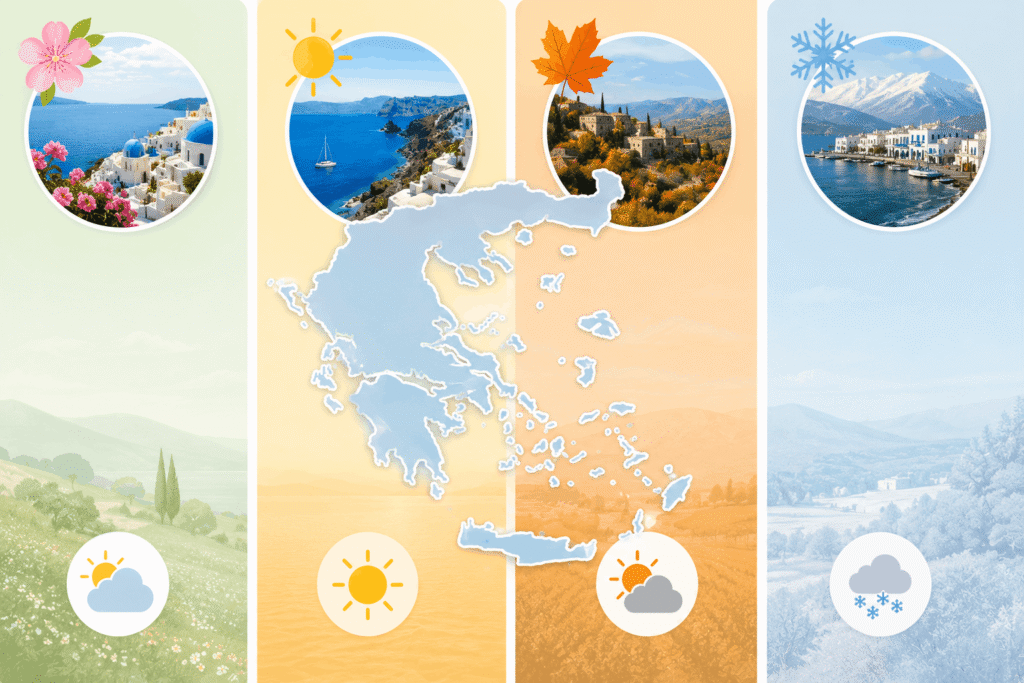
| Month | Best For | Crowd Level | Sea Temperature | Budget Level |
| May | Sightseeing, hiking | Low to Medium | Cool, not ideal for swimming | $$ |
| June | Balanced weather and activity | Medium | Warming up, swimmable | $$$ |
| July | Peak beach season | High | Warm | $$$ |
| August | Peak beach season | High | Warmest of the year | $$$ |
| September | Best overall balance | Medium | Warm, ideal for swimming | $$ to $$$ |
| October | Sightseeing, fewer crowds | Low to Medium | Cooling but swimmable | $$ |
| November to March | City breaks, Athens focus | Low | Too cold for most swimmers | $ to $$ |
Prices and crowd levels are general patterns and shift year to year, so check closer to your travel dates for specifics.
Budget Comparison by Season
| Season | Budget Level | Why |
| Spring (April to June) | $$ | Prices rise closer to June as demand builds |
| Summer (July and August) | $$$ | Peak pricing across flights, hotels, and ferries |
| September | $$ to $$$ | Still high season, but often slightly better value than August |
| October | $$ | Prices ease as the islands wind down |
| Winter (November to March) | $ | Lowest prices of the year, mainly for Athens-based trips |
Best Time to Visit Greece by Category
- Best overall month: September
- Best for beaches and swimming: late June through early September
- Best for sightseeing without crowds: May or October
- Best for a budget trip: November to March, focused on Athens
- Best for island hopping: June, before Meltemi winds peak
How Far Ahead Should You Book Greece?
- May to June: book 2 to 3 months ahead for good pricing and availability.
- July to August: book 4 to 6 months ahead, since this is the highest-demand window of the year.
- September: 3 to 4 months ahead is usually enough, though popular islands still fill up.
- Winter (November to March): 1 to 2 months ahead is typically sufficient, since demand is much lower.
What Should You Pack?
Spring (April to June): light layers, a rain jacket for occasional showers, and comfortable walking shoes for sightseeing.
Summer (July and August): breathable, lightweight clothing, strong sunscreen, and a hat, since midday heat can be intense.
October: a light sweater for cooler evenings, along with summer clothing for warm afternoons.
Winter (November to March): a warm jacket, since Athens and northern Greece can get genuinely cold and occasionally see rain or even light snow inland.
Best Time to Visit Greece by Activity
| Activity | Best Time |
| Swimming | June to September |
| Hiking | April to May |
| Sailing | June to September |
| Honeymoon | May, June, or September |
| Photography | April, May, or October |
Best Time to Go to Greece: Season by Season
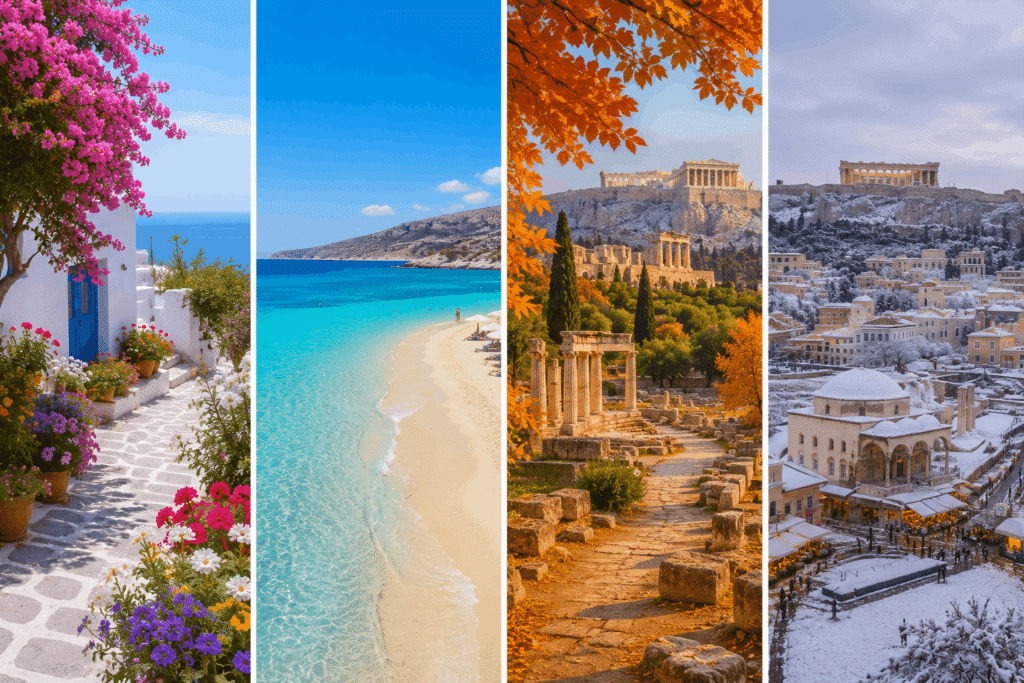
Spring (April to June)
April: cooler weather, wildflowers, and fewer crowds make it a good choice for hiking and city sightseeing, although many smaller islands are still preparing for the tourist season.
Best for: hiking, sightseeing, and travellers who want blooming landscapes without summer heat.
Weather: mild and warming through the season, with May often bringing comfortable daytime temperatures but sea water still too cool for most swimmers.
Who should skip this: anyone whose main goal is beach time and swimming, since the water rarely warms up enough until late May or June.
Practical tip: Many small island businesses do not fully reopen until May, so travellers visiting smaller islands in April may find some restaurants and shops still closed for the season.
Summer (July and August)
Summer is peak season across the country, though July and August each have their own personality worth knowing about.
Best for: travellers who want guaranteed warm weather, lively nightlife, and full beach season.
Weather: hot and dry, with the sea at its warmest and crowds at their peak across the mainland and islands.
Who should skip this: travellers who dislike heat or crowds, since July and August are consistently the busiest and most expensive months to visit.
Practical tip: the Aegean experiences a strong seasonal wind called the Meltemi, which peaks in intensity around mid-July to mid-August and can delay or cancel smaller ferries between islands, particularly around windier islands like Mykonos and Tinos. Travellers with tight ferry connections during these weeks should build in extra buffer time.
Greece in August
August is the single most popular month to visit, and understanding why helps set expectations. It brings the hottest temperatures and warmest sea water of the year, alongside the highest hotel prices and biggest crowds. Many Greek businesses also close briefly around mid-August for a national holiday, so smaller family-run tavernas in less touristy areas may be shut for a few days.
Best Time to Visit Greece in September

September is often considered the strongest all-around month, and it earns that reputation for a specific reason: the sea has spent all summer warming up, so swimming conditions are excellent while crowds start thinning as the school year begins elsewhere.
Best for: travellers who want summer-level swimming without summer-level crowds or prices.
Weather: warm days with cooler evenings by the second half of the month, so packing a light layer is worth it.
Who should skip this: travellers hoping for rock-bottom prices. September remains high season on many popular islands, like Santorini and Mykonos, though mainland destinations often become less crowded earlier in the month.
Practical tip: businesses that closed briefly in August for local holidays are back open, and island life feels more relaxed than during peak summer weeks.
Best Time to Visit Greece in October
October tends to be the quieter cousin of September, with mild weather holding on even as the islands start winding down for winter.
Best for: travellers who prioritise sightseeing and lower prices over swimming.
Weather: cooler than September but often still warm enough for swimming in the first half of the month, particularly in Crete.
Who should skip this: travellers set on visiting smaller, less-developed islands, since many of these start shutting down tourist services by late October.
Practical tip: Athens, Crete (particularly Chania and Heraklion), and Santorini stay lively and well-serviced later into the year than smaller islands, since they have large enough local populations to stay open year-round.
Winter (November to March)
Best for: budget travellers and anyone focused on Athens rather than island beaches.
Weather: cool and occasionally rainy, with Athens staying milder than northern Greece, which can see genuinely cold temperatures and light snow inland.
Who should skip this: travellers hoping to visit smaller islands, since most reduce ferry schedules and close a large share of tourist businesses for the season.
Practical tip: this is the best-value time of year for an Athens city break, with lower flight and hotel prices than any other season.
Best Time to Visit the Greek Islands
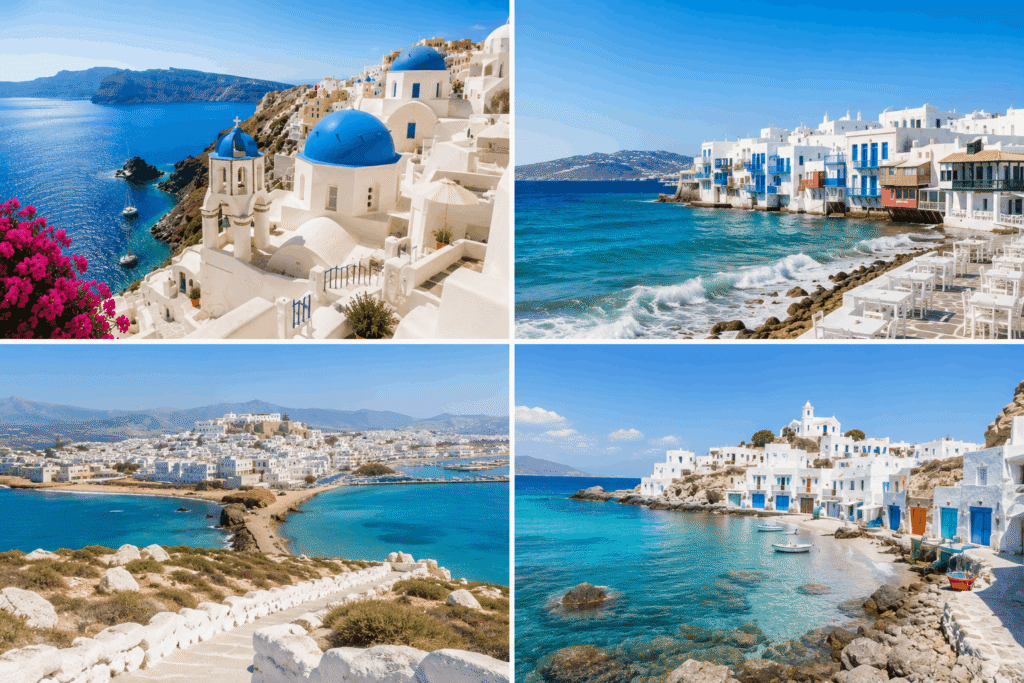
Island timing deserves separate attention, since it does not always match mainland timing.
Best for: travellers focused on beaches, island-hopping, and swimming, rather than city sightseeing.
When they’re fully open: Most smaller Cycladic islands, including Naxos, Paros, and Milos, are only fully staffed and open from late May through September, unlike Athens, which operates year-round.
Who should skip peak season: Travellers hoping to avoid the Meltemi winds entirely should aim for June rather than July or August, since wind intensity typically increases through midsummer.
Practical tip: ferry schedules shrink significantly outside the May to October window, so island-hopping trips planned for the off-season require far more careful ferry research than a summer trip.
Best Time to Visit Popular Greek Destinations
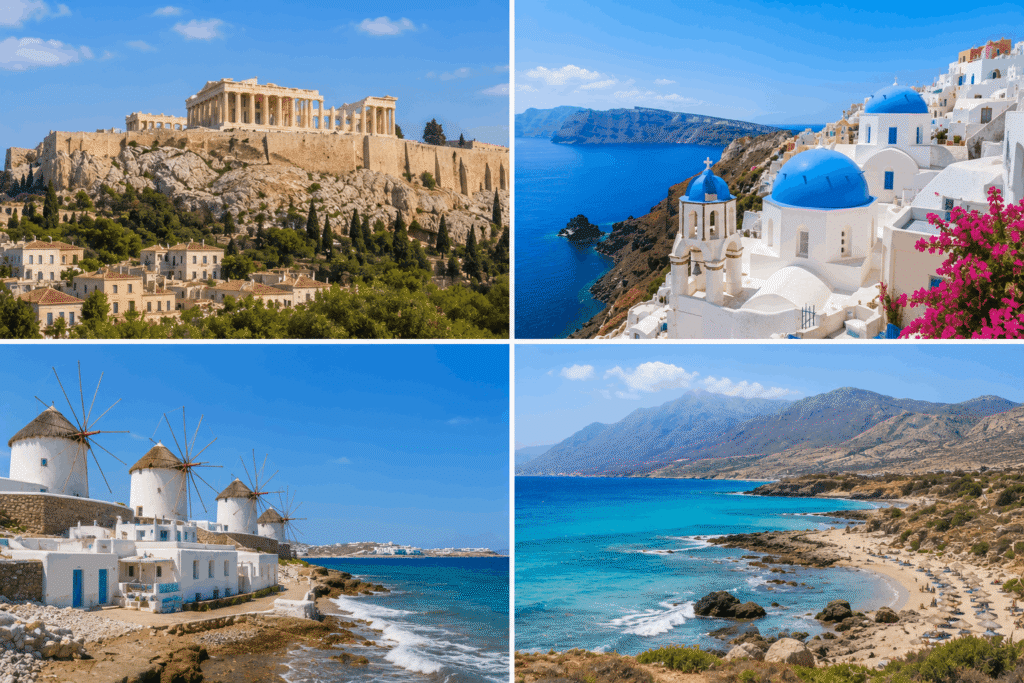
- Santorini: stays busy but pleasant from April through early November and is one of the few islands with enough infrastructure to feel worthwhile even in cooler months.
- Mykonos: best from June through September, since much of its nightlife and beach club scene depends on the island being in full summer swing.
- Athens: genuinely a year-round destination, since major museums and the Acropolis stay open through winter with far smaller crowds.
- Crete: the largest island and one of the few where swimming is still comfortable into October thanks to its size and southern location.
Best Month to Visit Greece: A Quick Answer
If forced to pick one single best month, most travel guides and repeat visitors land on September since it balances warm sea temperatures, thinning crowds, and still-open businesses better than any other single month. May and October both make strong runner-up cases if sightseeing matters more to you than swimming.
Common Mistakes When Planning a Greece Trip
- Booking ferries too tightly: a delayed or cancelled ferry due to Meltemi winds can derail a tight island-hopping schedule, so build in buffer days where possible.
- Assuming every island is open year-round: many smaller islands significantly reduce services or close altogether outside the May to October window.
- Underestimating July and August heat: midday temperatures can be intense enough to affect sightseeing plans, especially in Athens.
- Renting a car without checking island road conditions: narrow, steep roads on islands like Santorini catch some visitors off guard, particularly those unfamiliar with manual transmissions or cliffside driving.
- Visiting major sites like the Acropolis at midday: arriving early morning or late afternoon avoids both the worst heat and the biggest crowds.
Frequently Asked Questions
What is the best time to go to Greece?
September is generally considered the strongest overall month, combining warm sea temperatures with fewer crowds than peak summer.
What is the cheapest time to visit Greece?
November through March tends to offer the lowest prices, particularly for Athens-based trips, though most smaller islands significantly reduce services during this period.
What is Greece’s shoulder season?
Greece’s shoulder season generally falls in May, June, September, and October, when weather is favourable but crowds and prices sit below peak summer levels.
Is it better to visit the Greek islands or the mainland?
It depends on your priority. The islands are best from late May through September for swimming and beach access, while mainland cities like Athens stay fully open and pleasant to visit year-round.
Do I need a passport to travel to Greece?
Yes, US citizens need a valid passport to enter Greece, since it is a member of the European Union and not one of the places you can travel to without a passport.
Final Recommendation
If swimming and beach time matter most, aim for late June through early September. If you want to avoid crowds while still enjoying warm weather, September or May are the strongest picks. If budget is the top priority and you don’t mind cooler weather, focus your trip on Athens between November and March.
Conclusion
The best time to visit Greece depends on whether swimming, sightseeing, or budget matters most to your trip. Match your priority against the month-by-month breakdown above, then check ferry schedules and flight options for your specific dates before booking. If you’re planning a longer international trip like this one, our guide to the best airlines for international travel can help you compare cabin comfort for the flight itself, and if you’re travelling with kids, our guide to family-friendly destinations covers how to plan around younger travellers needs.
Sources
- Greek National Tourism Organisation (Visit Greece)
- Hellenic National Meteorological Service seasonal and climate data
- UK Foreign, Commonwealth & Development Office travel guidance for Greece
- Blue Star Ferries and Seajets official schedules for seasonal route changes