Christmas Tree Decor: A Complete Guide to a Tree That Looks Intentional
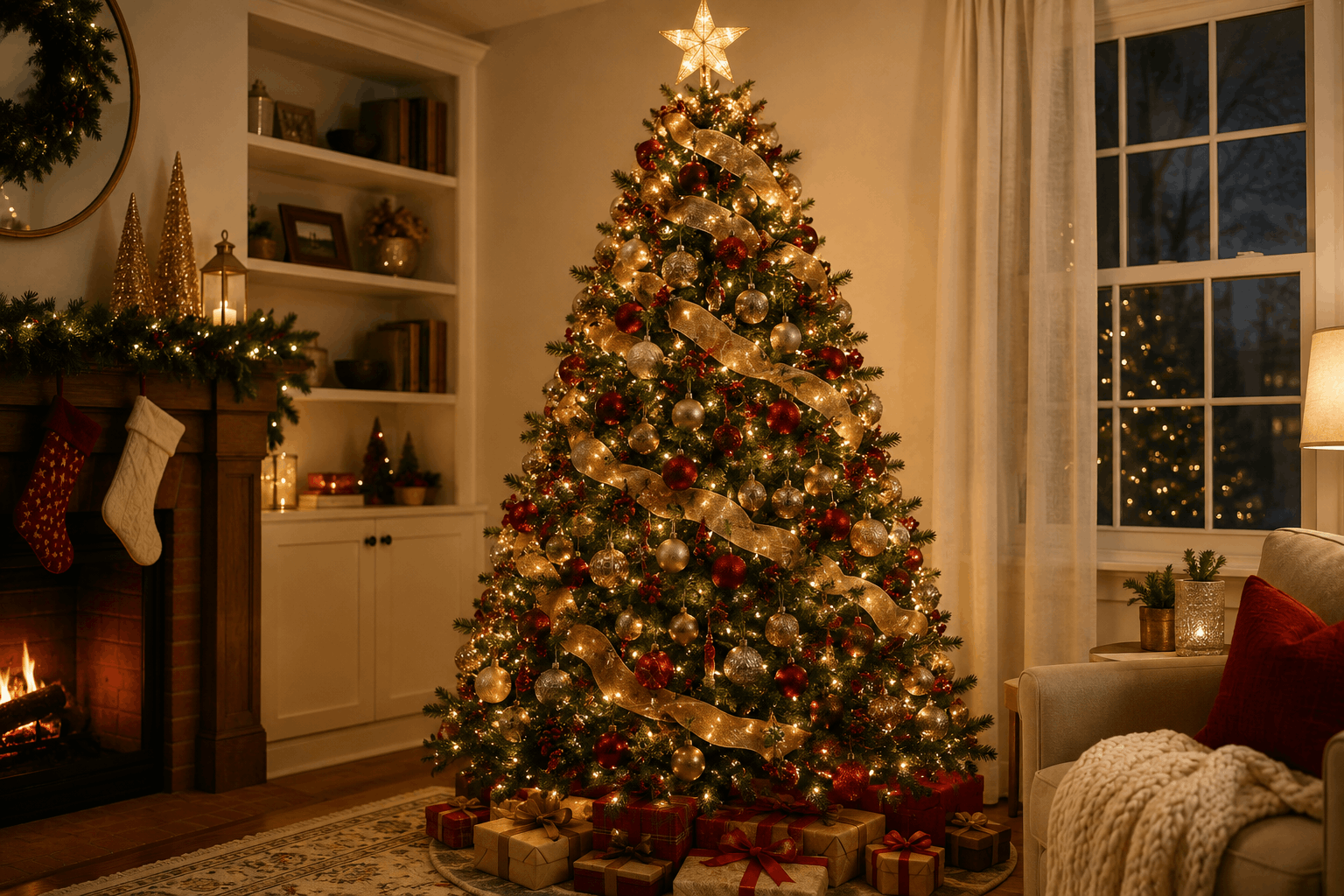
Most trees that look “off” aren’t missing ornaments. They were decorated in the wrong order. Adding ribbon after ornaments makes it sit on top instead of weaving through the branches. Adding lights last knocks loose whatever you’ve already hung. The sequence matters as much as the decorations themselves.
This guide covers Christmas tree decor by style, budget, and space, along with the layering sequence and lighting math that make the difference between a tree that looks curated and one that looks thrown together.
Who this guide is for: anyone decorating their first tree, people refreshing a tired-looking annual setup, and anyone working with a small space or a tighter budget this year.
Last verified: July 2026.
Quick Answer
A well-decorated Christmas tree generally follows four layers in order: lights first, ribbon or garland second, ornaments third, and the topper last. For lighting, a common guideline is about 100 lights per foot of tree height, so a 6-foot tree wants roughly 600 lights, and a 7.5-foot tree wants closer to 750.
How We Chose These Ideas
Every idea here was evaluated against the same criteria, so the guide stays practical rather than purely aspirational.
- Real, current style trends rather than dated defaults
- Practical mechanics, like lighting quantity and layering order, not just visual inspiration
- A mix of budget levels and space constraints
- Genuine safety considerations for real trees
The Right Decorating Sequence
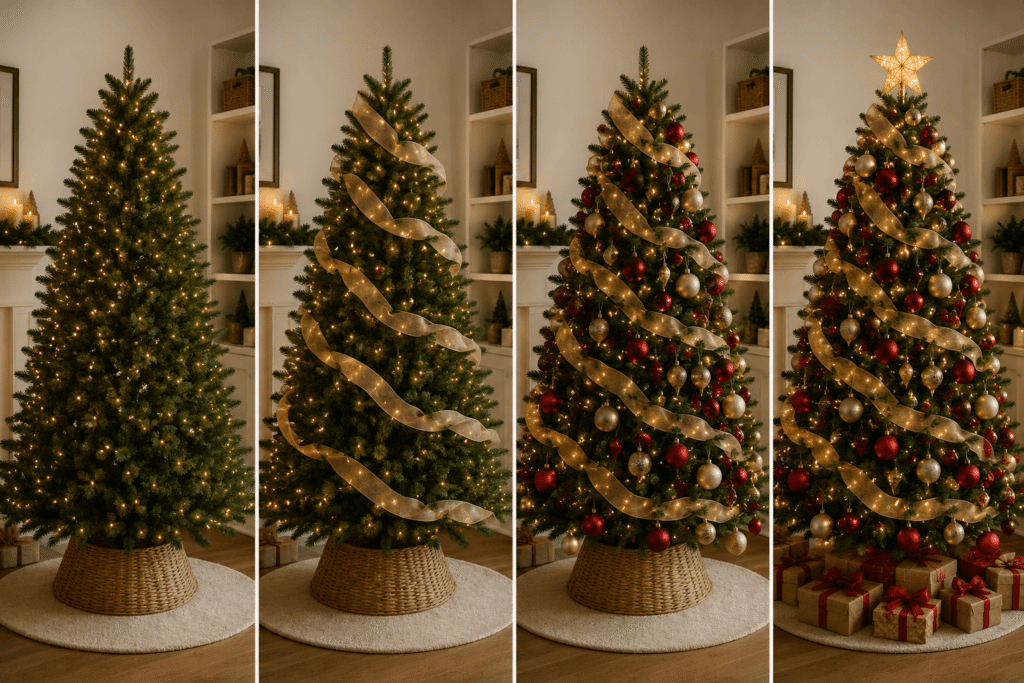
Decorating in the correct order keeps every element visible and prevents the common problem of things sliding or bunching up.
- Lights first: work from the trunk outward on each branch, rather than just wrapping the outer surface, so the glow comes from inside the tree, not just the front.
- Ribbon or garland second: weave it through the branches at this stage, before ornaments, so it threads naturally instead of sitting on top.
- Ornaments third: start with larger, heavier ornaments closer to the trunk for stability, then add smaller ones toward the tips.
- Topper last: adding it last avoids knocking loose anything already placed below it.
Who should adjust this order: anyone using a pre-lit artificial tree, since the lighting step is already done, letting you start directly with ribbon or garland.
Lighting Math: How Many Lights Do You Actually Need
A commonly used guideline is roughly 100 lights per foot of tree height. A 6-foot tree generally wants around 600 lights and a 7.5-foot tree closer to 750. For a denser, more magazine-style glow, doubling that to 150 to 200 lights per foot is common among more elaborate setups. Preferences vary based on how full or sparse the tree itself is and the overall effect you’re going for, so treat these figures as a starting point rather than an exact requirement. Buying one extra strand beyond your calculated total is a simple way to avoid a mismatched replacement if one strand fails partway through decorating.
Tree Size, Lights, and Ornament Guide
| Tree Height | Recommended Lights | Ornament Range |
| 4 ft | About 400 | 40 to 60 |
| 6 ft | About 600 | 90 to 120 |
| 7.5 ft | About 750 | 120 to 180 |
| 9 ft | 900 or more | 180 to 250 |
These figures are general planning guidelines. Actual needs vary by how full the tree is, the ornament sizes used, and personal preference for density.
Quick Comparison: Christmas Tree Decor Styles
| Style | Best For | Color Palette |
| Classic traditional | A familiar, nostalgic look | Red, green, and gold |
| Wine and burgundy | A sophisticated take on classic red | Deep wine, burgundy, warm metallics |
| Woodland natural | A cozy, textured, rustic feel | Browns, greens, natural wood tones |
| Scandinavian minimal | A calm, uncluttered look | White, natural wood, soft gray-green |
| Geometric and tech-forward | A modern, striking display | Varies, often paired with white or colored LED patterns |
| Vintage elegance | An elegant, old-fashioned feel | Warm neutrals with statement ribbon |
Style trends shift year to year, so treat these as current starting points rather than fixed categories.
Christmas Tree Decor by Category
- Best for a nostalgic, familiar look: classic traditional red, green, and gold
- Best for the 2026 color trend: deep wine and burgundy tones
- Best for a cozy, textured feel: woodland natural with pinecones and wood ornaments
- Best for a modern minimalist space: Scandinavian white and natural wood
- Best for a statement piece: geometric light patterns or oversized bows
- Best for an old-fashioned, refined look: vintage elegance with statement bows and warm lighting
Classic Traditional
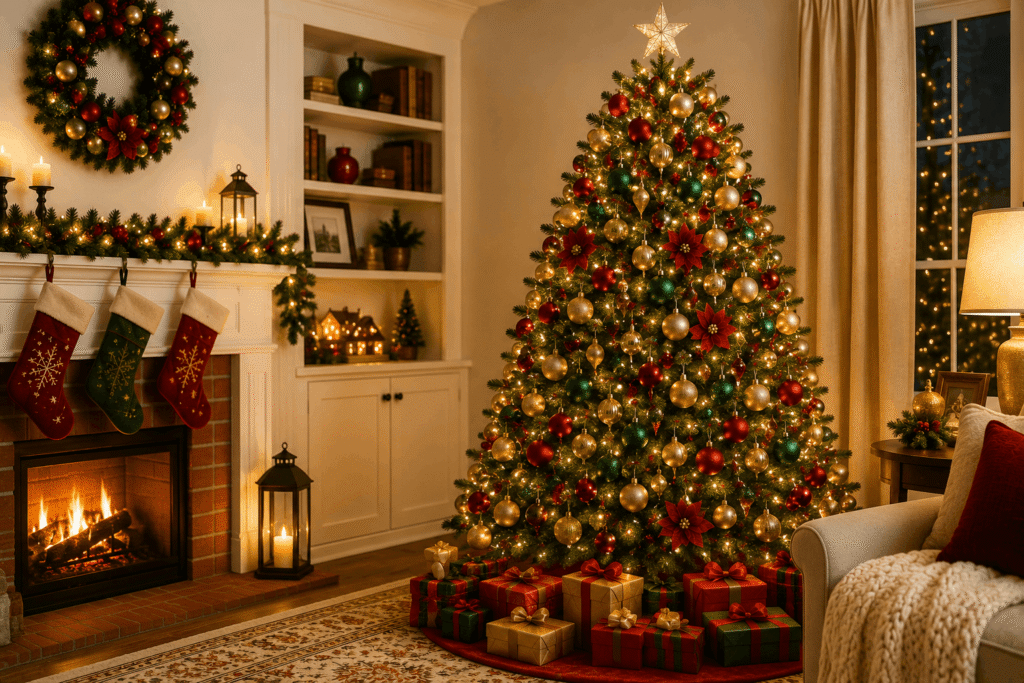
Best for: anyone wanting the nostalgic, familiar look associated with classic holiday movies.
Colours and materials: red, green, and gold glass ornaments; warm-white lights; and a star or angel topper.
Why it works: mixing matte, shiny, and glitter finishes within the same red, green, and gold palette keeps the tree from looking flat, since the varied textures catch light differently at each depth.
Who should skip this: anyone wanting a more distinctive, less common look, since this style is intentionally the most familiar option.
Practical tip: restraint in the colour palette paired with generous, even lighting keeps this classic style feeling current rather than dated.
Wine and Burgundy (2026 Trend)
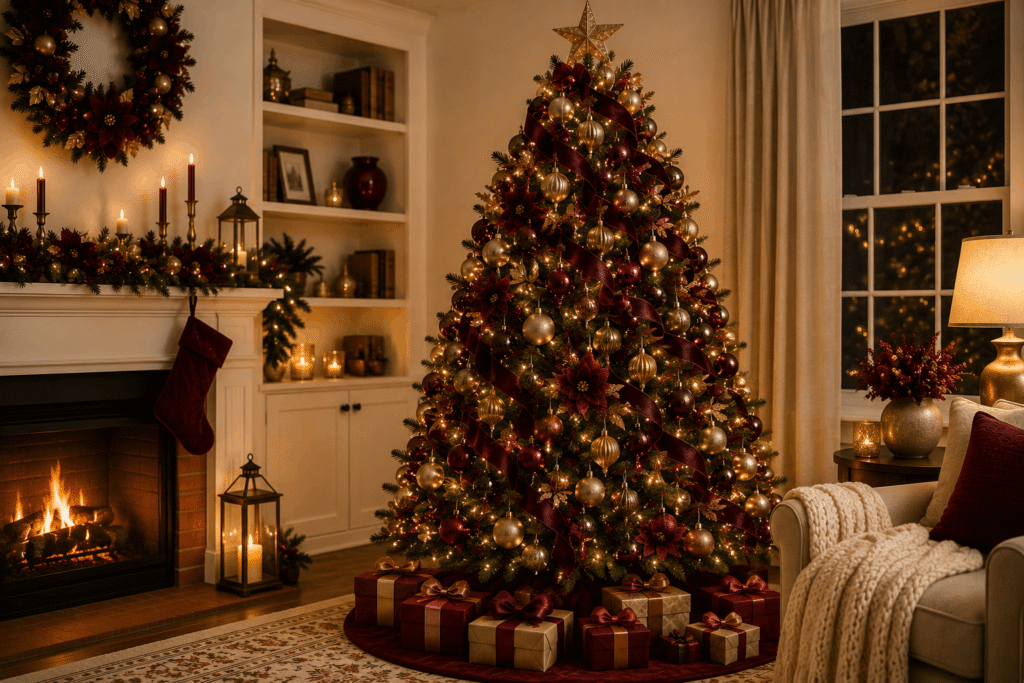
Best for: anyone wanting a fresh take on traditional red without a full style overhaul.
Colours and materials: deep wine and burgundy ornaments, warm metallic accents like gold or copper, and rich ribbon.
Why it works: deeper, more sophisticated red tones have been highlighted by interior design publications, including Homes & Gardens, as a defining color trend for the 2026 holiday season, giving a familiar red-based tree a more updated feel.
Who should skip this: anyone strongly attached to brighter, more classic red tones, since this palette leans deliberately darker and richer.
Practical tip: pairing wine and burgundy ornaments with warm metallics, rather than cooler silver tones, keeps the palette feeling cohesive rather than mismatched.
Woodland Natural
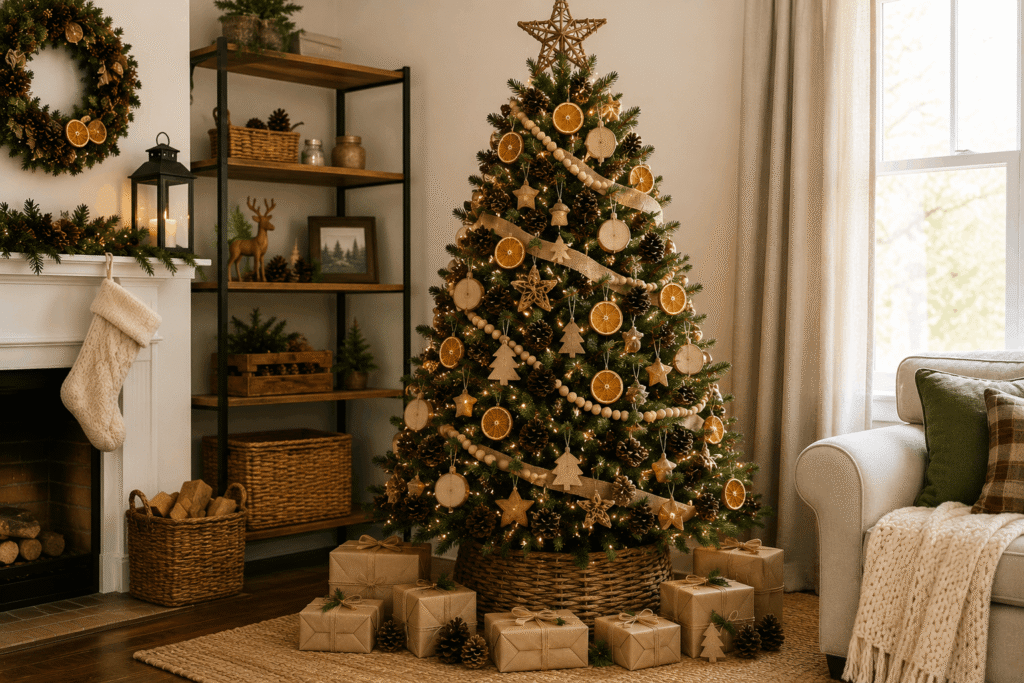
Best for: a cosy, textured tree that feels grounded in natural materials.
Colours and materials: pinecones, dried orange slices, chunky wooden ornaments, and burlap or twine accents.
Why it works: the mix of tactile, natural materials adds visual texture that purely glass or plastic ornaments don’t provide on their own.
Who should skip this: anyone wanting a more polished, formal look, since this style leans intentionally rustic and imperfect.
Practical tip: dried orange slices and other natural elements can be made at home relatively cheaply, making this one of the more budget-friendly styles on this list.
Scandinavian Minimal
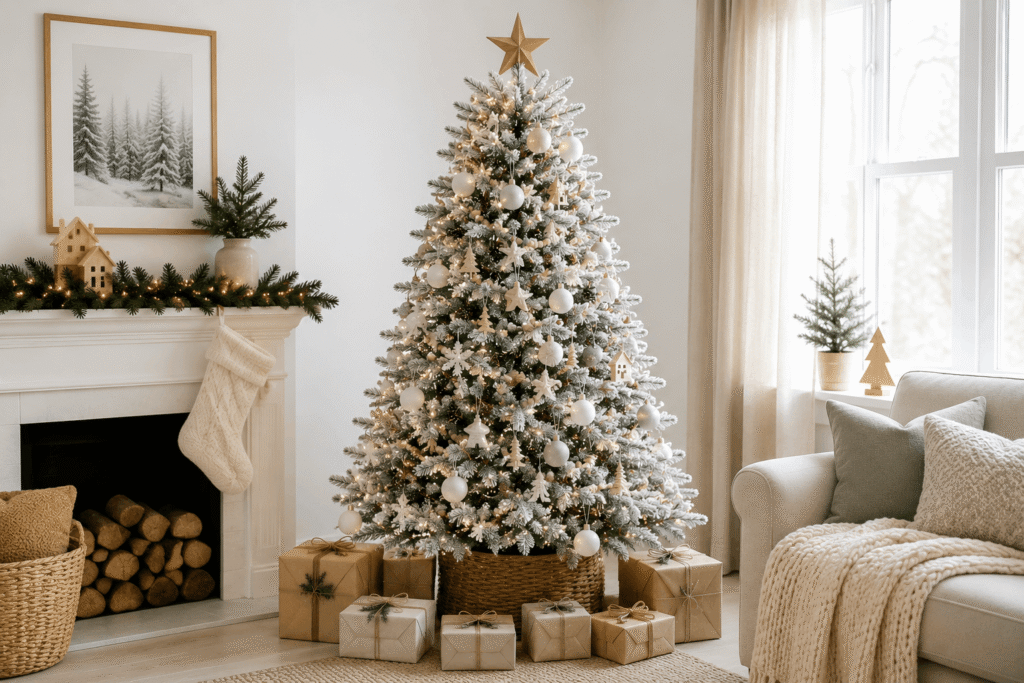
Best for: a calm, uncluttered tree that fits a modern or minimalist home.
Colours and materials: white lights, a sparse or flocked tree, and ornaments in white, natural wood, and soft grey-green.
Why it works: the restrained palette and generous negative space between ornaments are the actual design choices here, not a lack of decorating.
Who should skip this: anyone who prefers a fuller, more densely decorated tree, since this style depends on visible open space to work.
Practical tip: resist the urge to fill every gap. The negative space between ornaments is what makes this style read as intentional rather than sparse.
Geometric and Tech-Forward Lighting
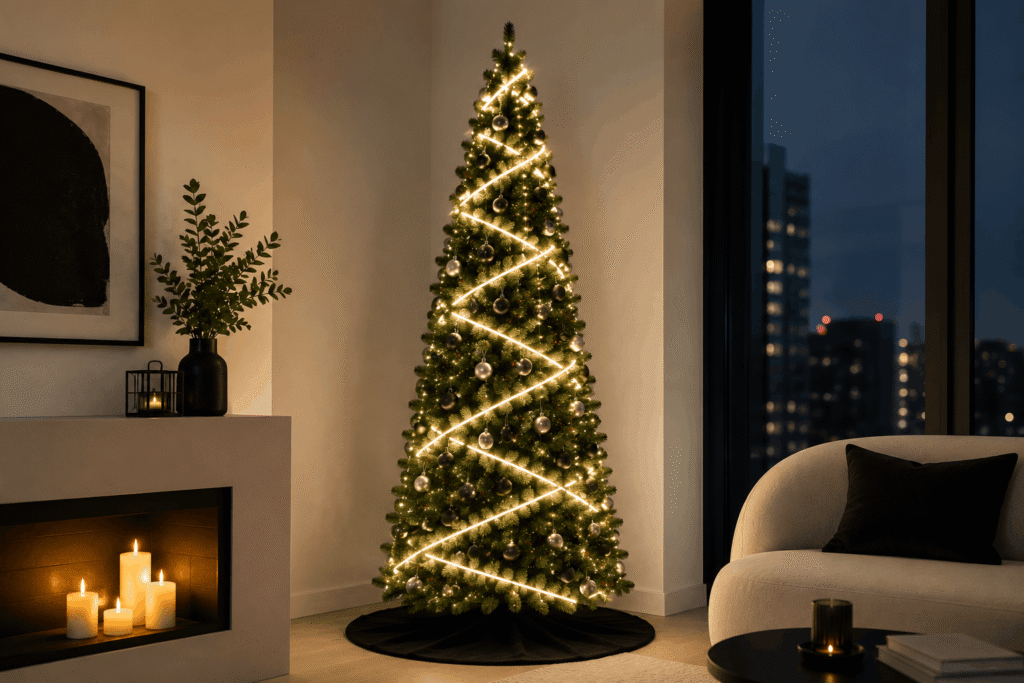
Best for: anyone wanting a modern, statement-making tree that stands out from traditional styles.
Colours and materials: lights arranged in deliberate geometric or spiral patterns rather than randomly wrapped, often on taller, narrower trees.
Why it works: the structured light pattern creates visible architectural dimension, giving the tree a distinct look even before ornaments are added.
Who should skip this: anyone wanting a quick, low-effort setup, since precise geometric light patterns take more planning and time than random wrapping.
Practical tip: this style tends to look strongest on taller, narrower trees, where the vertical lines have more room to read clearly.
Vintage Elegance
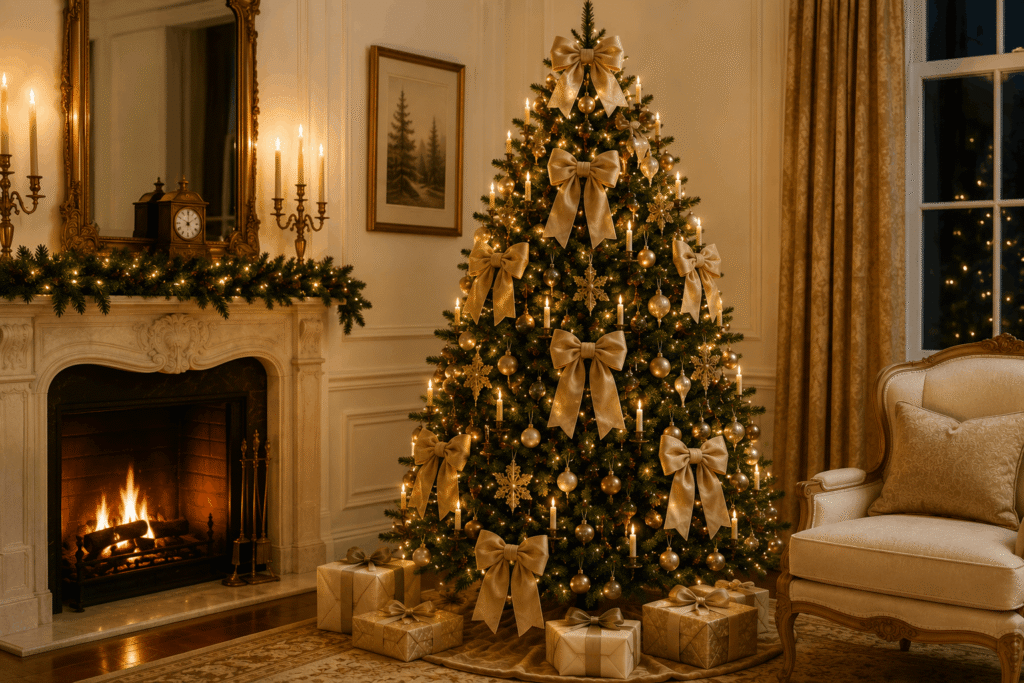
Best for: anyone wanting an old-fashioned, refined look reminiscent of an earlier era.
Colours and materials: oversized statement bows scattered throughout the tree, warm neutral tones, and candlelit-style warm lighting rather than bright white.
Why it works: the combination of statement bows and warm, low lighting creates a cohesive, period-appropriate feel that works whether the rest of the tree is minimal or fully decorated.
Who should skip this: anyone wanting a brighter, more contemporary look, since this style leans deliberately warm, soft, and subdued rather than crisp or modern.
Practical tip: spacing the statement bows evenly, rather than clustering them, keeps the look elegant rather than cluttered.
Budget-Friendly Christmas Tree Decor
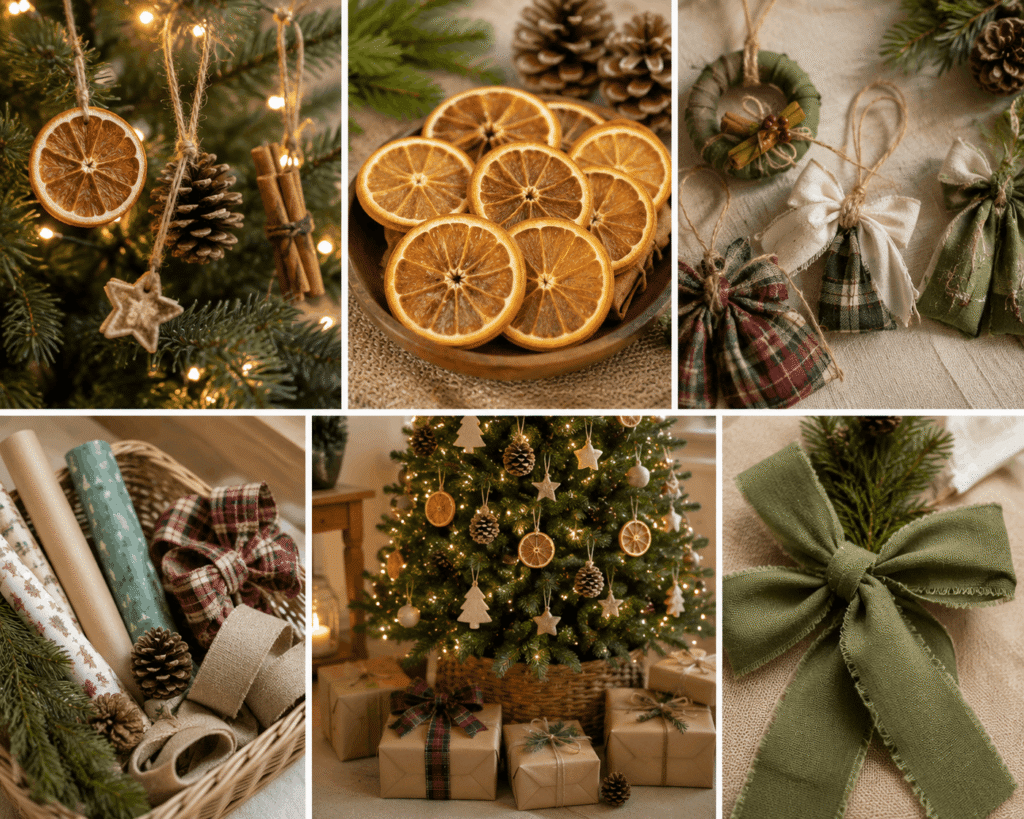
- Repurpose what you already own: ribbon, fabric scraps, and even wrapping paper can become ornaments or bows without new purchases.
- Make natural ornaments: dried orange slices, pinecones, and cinnamon sticks cost little and fit the natural woodland style especially well.
- Buy lights and basics after the holiday: post-Christmas clearance sales are generally the cheapest time to stock up on lights and ornaments for next year.
- Focus spending on a few statement pieces: a handful of higher-quality ornaments placed prominently often reads as more intentional than many cheap ones spread evenly.
Small Space and Alternative Tree Ideas
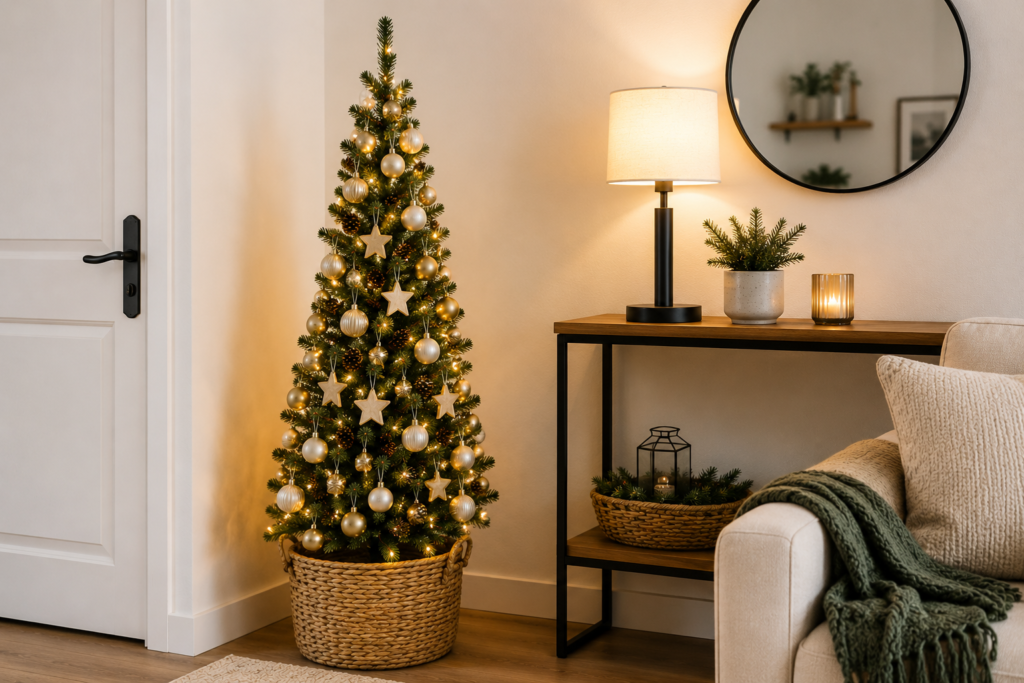
Not every home has room for a full-sized tree. Tabletop trees, wall-mounted tree decals, or a single garland arranged in a tree shape can bring the same seasonal feel into a smaller footprint. Pencil trees, notably narrower than standard trees, fit well in corners, entryways, or apartments without sacrificing height. If you’re working with limited square footage generally, our guide to making the most of a small living room covers similar space-maximising strategies that apply well beyond the holidays.
Real Tree Safety
If you’re using a real tree, water it daily, since a dried-out tree is a genuine fire hazard, and keep it away from direct heat sources like fireplaces or radiators. Check that all light strands are in good condition before wrapping them on the tree, since frayed cords are a common and preventable cause of holiday electrical fires.
Common Mistakes in Christmas Tree Decorating
- Decorating in the wrong order: adding ribbon or garland after ornaments causes it to sit on top instead of weaving through naturally.
- Underestimating how many lights you need: a tree that looks sparse in photos often needs meaningfully more lights than expected, closer to the 100-per-foot guideline than a rough guess.
- Filling every visible gap: especially in minimalist styles, resisting the urge to add “just one more ornament” often improves the overall look.
- Mixing too many unrelated colour palettes: picking one or two core colours, then layering textures and finishes within that palette, tends to look more cohesive than a wide mix of unrelated colours.
- Ignoring real tree fire safety: a dry, unwatered real tree combined with old string lights is a genuinely dangerous and avoidable combination.
Frequently Asked Questions
What order should you decorate a Christmas tree in?
Lights first, then ribbon or garland, then ornaments, and the topper last. This order keeps each layer visible and prevents earlier decorations from sliding or bunching.
How many lights does a Christmas tree need?
A common guideline is roughly 100 lights per foot of tree height, so a 6-foot tree needs around 600 lights, and a 7.5-foot tree needs closer to 750. Doubling that gives a denser, more magazine-style glow.
What is the Christmas tree colour trend for 2026?
Deep wine and burgundy tones have emerged as a popular decorating trend for the 2026 holiday season, cited by several interior design publications, offering a more sophisticated take on traditional red-and-gold trees.
How do you decorate a Christmas tree on a budget?
Repurposing items you already own, making natural ornaments like dried orange slices, and buying lights and basics during post-holiday clearance sales are among the most effective low-cost strategies.
What are good Christmas tree options for small spaces?
Tabletop trees, wall-mounted tree decals, and narrow pencil trees all provide a festive look without requiring the floor space a full-sized tree needs.
Final Recommendation
If you want a nostalgic, familiar look, classic traditional red, green, and gold remain a reliable choice. If you want to feel current without a full style change, wine and burgundy tones update that same classic palette for 2026. If you’re working with a small space or tight budget, natural, handmade elements and a smaller alternative tree can look just as intentional as a full-sized, fully purchased setup.
Conclusion
A great-looking Christmas tree comes down to sequence and proportion as much as style. Layer your lights, ribbon, and ornaments in order, and use enough lighting for the tree’s actual size. Pick a colour palette and style that fits your space and budget, then commit to it rather than mixing too many directions at once.
Sources
- National Christmas Tree Association, general tree care and safety guidance
- National Fire Protection Association (NFPA), holiday and Christmas tree fire safety guidance
- Interior design and holiday decor trend coverage, cross-referenced for consistency across multiple sources